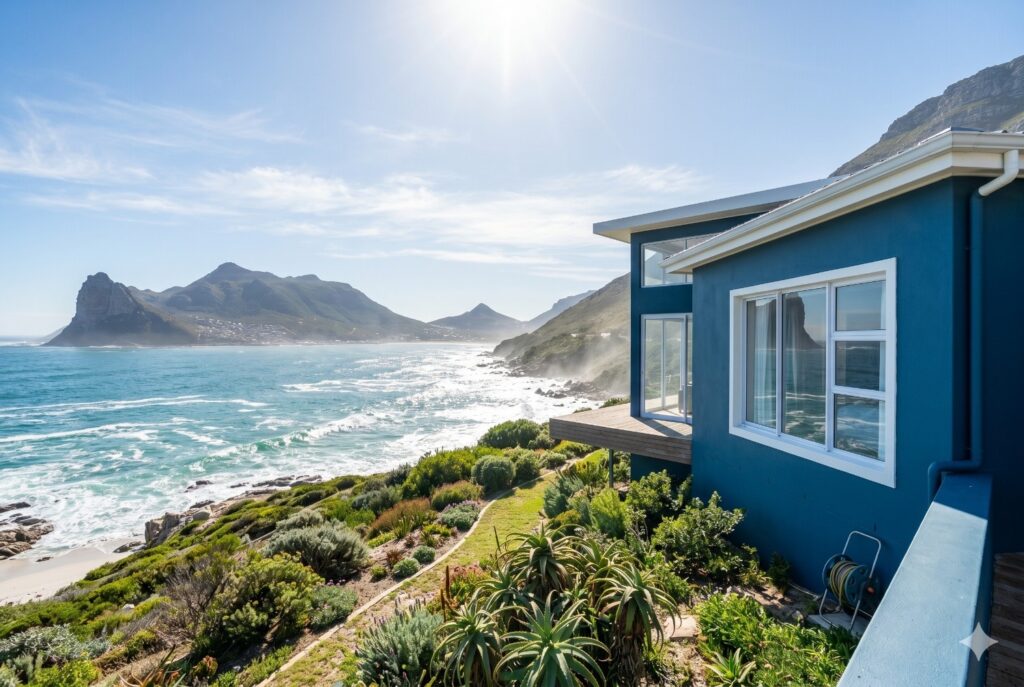
The best exterior paint for Cape Town is a high-quality pure acrylic system with built-in UV resistance and anti-fungal properties. For coastal properties, especially along the Atlantic Seaboard, a solvent-based Pliolite coating offers superior durability against salt spray and moisture.
These systems are engineered to handle the mechanical stress of rapid temperature changes and protect the substrate from wind-driven winter rain. The correct specification prevents premature peeling, chalking, and damp penetration.
Understanding Cape Town’s Microclimates: UV Rays, Salt Spray, and Winter Rain
Cape Town’s unique combination of intense solar radiation, corrosive marine salt, and persistent winter moisture subjects standard exterior paint to a continuous assault that triggers rapid degradation and adhesion loss.
High ultraviolet rays break down chemical binders to cause color fading and brittleness, while hygroscopic salt particles trap atmospheric moisture on wall surfaces to promote blistering and fungal growth. Furthermore, severe wind-driven winter storms force water into hairline cracks, leading to destructive moisture ingress within the wall structure and eventual delamination of the paint film.
Key Properties of High-Performance Coastal Exterior Paints
A high-performance coastal exterior paint functions as a sophisticated chemical shield designed to deliver specific, long-term protective properties against severe weather elements. The essential properties required for a premium coastal-grade paint formulation include:
- Inherent UV Stability: Utilizing a high-quality pure acrylic base allows the coating to absorb or reflect solar energy without molecular breakdown, which successfully prevents surface chalking and ensures long-term color retention.
- Elastic Crack Bridging Flexibility: Incorporating flexible polymers enables the paint film to stretch and contract smoothly during dramatic daily temperature fluctuations, which maintains a continuous waterproof barrier across plaster walls prone to hairline fractures.
- Hydrophobic and Anti-Fungal Protection: Engineering a water-repellent yet breathable exterior film blocks winter rain from penetrating the substrate while simultaneously using active biocides to inhibit mold and mildew growth on damp, shaded walls.
Investing in a specialized coating system that exhibits these three core performance features guarantees that your home remains thoroughly protected against moisture ingress, structural movement, and solar degradation for years to change.
Preparing Your Walls for a Cape Town South-Easter
Proper surface preparation is mandatory for paint adhesion because Cape Town’s intense South-Easter winds constantly deposit fine dust and corrosive salt layers onto exterior walls. To prevent premature paint failure, all surfaces must undergo high-pressure washing to remove loose debris, followed by raking out and filling non-structural cracks with a flexible compound. Finally, applying an alkali-resistant primer to bare plaster or chalking surfaces ensures a stable substrate, creating a clean and secure bond for the protective topcoats.
How to Maintain Your Exterior Paintwork in a Marine Environment
Properties within a few kilometres of the coast require active maintenance to prolong the life of the exterior coating. The primary objective is to prevent the accumulation of salt deposits that accelerate the degradation of the paint film. An annual wash-down is the most effective maintenance procedure.
This involves rinsing the exterior walls with fresh water, typically using a garden hose, to dissolve and wash away the salt crystals that have accumulated over the year. This simple action significantly reduces the chemical attack on the paint binder and helps maintain its protective properties, potentially extending the time between repainting cycles by several years. For properties in extremely exposed areas like Bakoven or Llandudno, this should be done twice a year.
Top-Recommended Paint Types for Western Cape Properties
Selecting the right paint system requires careful assessment of your property’s specific geographic location and the underlying condition of its walls. The premier paint options recommended for regional conditions include:
- Premium Pure Acrylics: These coatings provide an optimal balance of durability and flexibility while delivering a smooth finish that offers superior dirt resistance and long-term color stability.
- Textured Matt Coatings: Formulated with interlocking aggregates like mica and silica, these thick films excel at hiding surface imperfections and bridging hairline cracks, though their textured profile can retain more dust in high-wind areas.
- Solvent Based Pliolite Systems: Engineered for maximum durability in heavily exposed coastal environments, these microporous resin systems offer exceptional alkali resistance, tenacious masonry adhesion, and rapid rain resistance within minutes of application.
Consulting with a technical specialist to evaluate your wall surfaces will ensure you choose the ideal formulation to withstand the unique environmental pressures of your specific neighborhood.
FAQs
What is the best month to paint the exterior of a house in Cape Town?
The ideal time to paint in Cape Town is during the dry, warmer months, typically from late spring to early autumn (October to April). This period offers moderate temperatures and low humidity, which allows the paint to cure correctly without drying too quickly or being compromised by rain.
How does salt spray affect exterior paint on the Atlantic Seaboard?
Salt spray deposits corrosive salt crystals onto the paint film. These crystals attract and hold moisture against the surface, which accelerates the breakdown of the paint’s chemical binders. This leads to a loss of adhesion, causing blistering, peeling, and premature chalking.
Should I use smooth or textured paint for my Cape Town home?
This depends on the condition of your walls. A smooth pure acrylic paint is easier to clean and resists dirt accumulation. A textured paint, like Plascon Micatex, is more effective at covering hairline cracks and minor plaster imperfections due to its higher film build and inclusion of aggregates.
How often do houses in Cape Town need to be repainted?
Due to the harsh coastal climate, houses in Cape Town generally require repainting more frequently than inland properties, typically every 5 to 7 years. Properties located directly on the coast may need attention sooner, around the 3 to 5-year mark, especially if they are exposed to strong sun and salt spray.