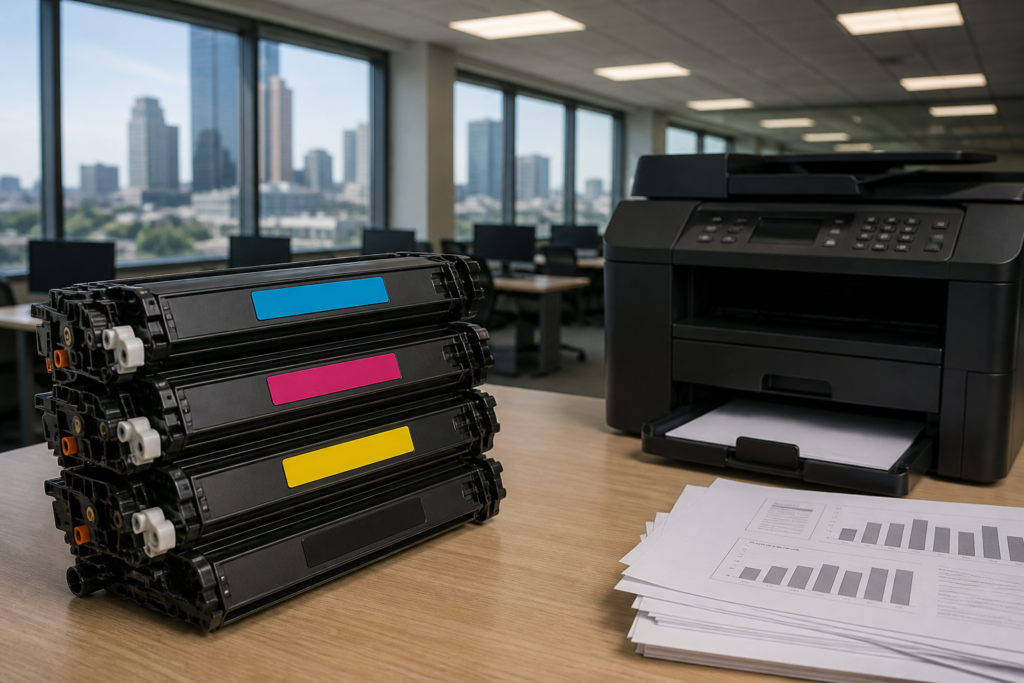
In the South African construction industry, profit margins are increasingly squeezed by rising material costs, fluctuating fuel prices, and the logistical challenges of site management. While contractors often focus on the procurement of bulk materials like cement, structural steel, and timber, a significant portion of project overheads is frequently overlooked: the administrative cost of project documentation. From tendering for multi-million rand contracts to the daily printing of as-built drawings, health and safety manuals, and NHBRC compliance documents, the demand for high-volume printing remains a constant in any professional site office or corporate headquarters.
Recent data indicates that the administrative burden on Johannesburg-based construction firms has reached an all-time high, driven by more stringent regulatory requirements and the need for physical records on-site. According to a recent industry study by Anza Technology, there is a rapidly rising demand for cost-efficient printing solutions across the Johannesburg corporate sector. This shift is particularly evident among large-scale contractors and specialist engineering firms who are moving away from traditional high-cost OEM models in favor of more sustainable, budget-conscious procurement strategies.
The Administrative Weight of Modern Contracting
The complexity of modern building projects requires an immense volume of physical paperwork. Despite the move toward digital transformation, physical site offices in South Africa still rely heavily on hard copies for site meetings, subcontractor coordination, and legal compliance. For instance, a standard tender submission for a commercial development in Sandton or Midrand can run into hundreds of pages, requiring multiple copies for different stakeholders.
Furthermore, SANS building regulations and Occupational Health and Safety (OHS) mandates require that safety files be physically present on-site at all times. These files are not static; they are updated daily with inspection reports, risk assessments, and tool-box talk registers. For a medium-to-large contractor, this translates into thousands of printed pages per month. When managed poorly, the cost of ink and toner can become a significant “silent” expense that erodes the bottom line of a project.
Addressing the “Toner Tax” on Construction Profits
The study highlights that many Johannesburg firms have historically overpaid for consumables due to a lack of centralized procurement. By analyzing the usage patterns of firms operating in the Gauteng region, the research suggests that switching to high-yield, cost-efficient alternatives can reduce administrative overheads by up to 30%. For a firm juggling multiple projects, these savings are equivalent to the cost of a junior site clerk or several months of site security services.
Industry specialist Anza Technology has noted that construction firms are now prioritizing “yield-per-page” metrics over brand loyalty. This is a pragmatic shift; in an environment where load-shedding and supply chain disruptions affect site productivity, contractors cannot afford the downtime or the inflated costs associated with inefficient printing hardware and expensive consumables.
Strategic Procurement of Office Consumables
To mitigate these costs, savvy project managers are re-evaluating their supply chains. The goal is to find a balance between print quality—essential for detailed architectural plans—and cost-per-page. Many are turning to an operational procurement portal to manage their requirements across multiple sites, ensuring that site offices in distant locations remain stocked without the need for emergency, high-retail-cost purchases.
Key factors to consider when selecting printing consumables for the construction sector include:
- Yield Consistency: Ensuring that cartridges meet or exceed their rated page capacity to prevent mid-project interruptions.
- Compatibility: Utilizing high-quality cartridges that are fully compatible with existing office hardware to avoid maintenance issues.
- Availability: Partnering with suppliers that have a robust presence in the Johannesburg area to ensure quick turnaround times for site office orders.
For those looking to streamline their supply chain, sourcing printing cartridges in Johannesburg has become a matter of strategic importance. By moving toward more cost-effective consumables, contractors can redirect capital toward core construction activities and site-level innovations.
Technical Reliability in Hostile Environments
It is important to note that site offices are often dusty, high-traffic environments that can be hard on sensitive electronics. The cartridges used must not only be cost-effective but also robust enough to produce clear, smudge-free documents that remain legible under site conditions. Smudged blueprints or illegible safety warnings are more than just a nuisance; they represent a potential compliance risk.
The Anza Technology report concludes that the corporate sectors in Johannesburg are leading a national trend toward “smart procurement.” This involves a move away from the “buy-as-needed” mentality toward a more analytical approach to office consumables. For the local builder, this means that every cent saved on a toner cartridge is a cent that stays in the project’s contingency fund—a vital buffer in an increasingly volatile market.
Conclusion
As the South African building sector continues to navigate a complex economic landscape, the focus on operational efficiency must extend beyond the brickwork and the slab. By addressing the rising cost of documentation through the use of cost-efficient printing technologies, Johannesburg’s contractors can ensure they remain competitive, compliant, and profitable. The data is clear: the firms that optimize their smallest expenses are often the ones best equipped to handle their largest projects.