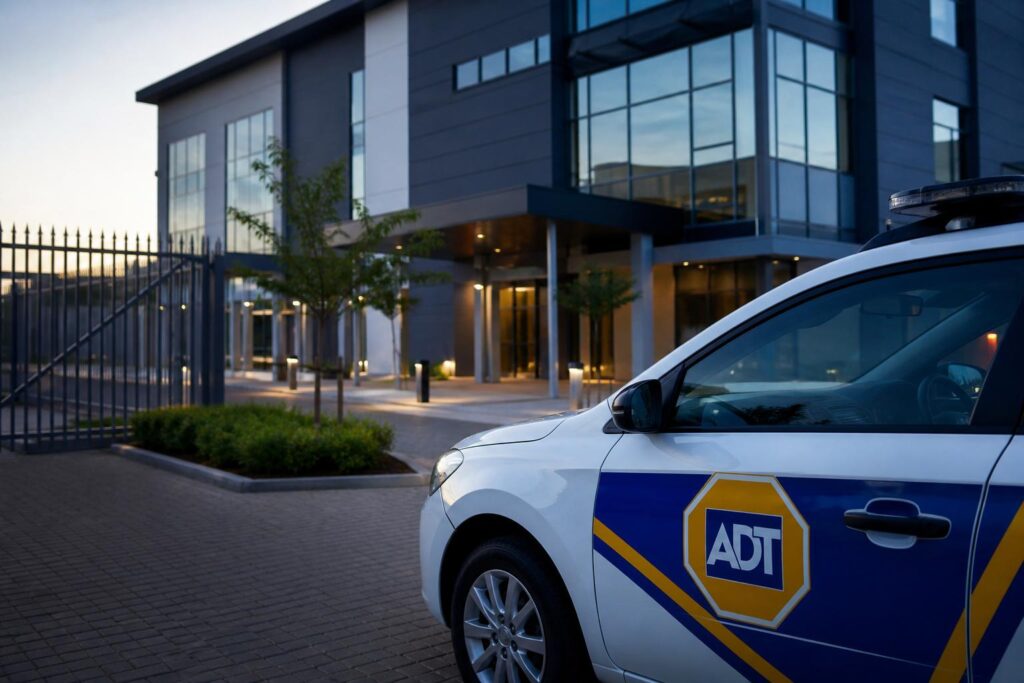
Pretoria, South Africa — Armed response services in Pretoria are undergoing a notable shift as commercial property owners, estate managers and homeowners respond to changing security risks, rising operational demands and greater pressure to ensure faster incident response. According to SMP Security, the evolution of armed response is being shaped by a combination of urban growth, infrastructure pressures and the need for security providers to integrate more closely with monitoring, access control and rapid verification protocols.
The change is particularly relevant in Pretoria, where business nodes, residential estates and mixed-use developments continue to expand across the metro. Security providers say clients are increasingly seeking services that are not only reactive, but coordinated, auditable and aligned with modern compliance expectations. In this environment, armed response services in Pretoria are being assessed less as standalone patrol functions and more as part of a broader risk-management framework.
Growing demand for integrated response capabilities
Security professionals say the traditional model of armed response — in which a vehicle is dispatched only after an alarm is triggered — is no longer enough for many sites. Commercial facilities in particular are prioritising layered protection, including verified alarm monitoring, perimeter checks, incident escalation procedures and integration with site-specific access systems.
SMP Security notes that businesses are looking for service providers that can respond within defined protocols and communicate clearly with clients, control rooms and on-site personnel. This is especially important in Pretoria’s commercial districts, where offices, warehouses, retail operations and logistics hubs face different threat profiles and require tailored response plans.
“Clients want certainty, not just presence,” SMP Security has indicated in its service positioning. “A credible response solution must be built around verification, speed and clear accountability.”
Residential security expectations are also changing
The same trend is visible in the residential market, where estate residents, sectional title schemes and standalone homeowners are looking for greater assurance that response teams can act quickly and appropriately. In Pretoria, where suburban density and new developments continue to reshape local neighbourhoods, security providers are being asked to support both deterrence and incident management.
For many households, the focus is no longer solely on alarms and sirens. Instead, residents expect response teams to work within a structured ecosystem that includes monitoring centres, neighbourhood intelligence, access verification and visible patrol support. That has placed greater emphasis on training, communication and operational consistency.
According to SMP Security, this shift reflects a broader consumer demand for professionalism in the security sector. Homeowners and estate trustees are increasingly evaluating providers on response times, escalation procedures, communication standards and the ability to coordinate with private and public emergency services when required.
Local conditions shaping security planning in Pretoria
Pretoria’s security environment is influenced by a range of local factors, including traffic congestion, varying urban densities, business-hour patterns and the mix of formal and informal commercial activity across the metro. These conditions affect how quickly a response unit can move, how incidents are verified and how security teams prioritise dispatch decisions.
For that reason, providers are placing more emphasis on route planning, control-room coordination and risk mapping. In practical terms, this means armed response is becoming more data-informed and less dependent on ad hoc intervention. The result is a service model that is expected to support not only emergency reaction, but also prevention and incident reduction.
This is particularly important for businesses operating outside standard hours. Warehouses, distribution centres and retail premises in Pretoria often need security arrangements that can respond to alarm activations after business hours, while also reducing false dispatches that waste time and strain operational resources.
Compliance, professionalism and accountability in focus
As expectations rise, so too does scrutiny of the security sector’s operating standards. Industry observers say clients are increasingly asking whether response teams are properly trained, vetted and aligned with the relevant regulatory requirements. For corporate clients, this has become part of broader governance and duty-of-care considerations.
SMP Security says that armed response must now be considered alongside service documentation, reporting and incident traceability. In a market where businesses and residents want evidence of performance, detailed communication and post-incident reporting are becoming as important as the response itself.
This is helping to raise the bar across the Pretoria market, where providers that can demonstrate operational discipline are better positioned to serve both commercial and residential clients. It is also pushing the sector toward more transparent service expectations, with clearer distinctions between basic response availability and more sophisticated security support.
What clients are looking for now
Security customers in Pretoria are increasingly prioritising the following:
- Faster and more predictable response times
- Verified alarm and incident dispatch procedures
- Integration with monitoring and access control systems
- Clear communication before, during and after incidents
- Service providers with local knowledge of Pretoria’s risk landscape
These priorities are influencing procurement decisions across both private and corporate sectors. Rather than focusing only on visibility, clients are seeking evidence that a provider can manage risk in a structured, accountable manner.
A broader shift in South African security expectations
The developments in Pretoria mirror a wider trend across South Africa, where safety concerns, insurance requirements and operational disruptions are pushing organisations to rethink how they procure security services. Armed response is increasingly being treated as one component of a multi-layered strategy that may include guarding, monitoring, access management and emergency coordination.
For SMP Security, this is an opportunity to position armed response as a professional service that supports continuity and reassurance, rather than a simple reactive measure. In a city like Pretoria, where commercial and residential needs are diverse and evolving, that distinction is becoming central to how security providers are judged.
As Pretoria’s security demands continue to change, the market appears to be moving toward solutions that are more integrated, more accountable and more closely aligned with the realities of urban risk. For clients, that means armed response is no longer just about arriving at a scene — it is about being prepared, connected and operationally effective when it matters most.