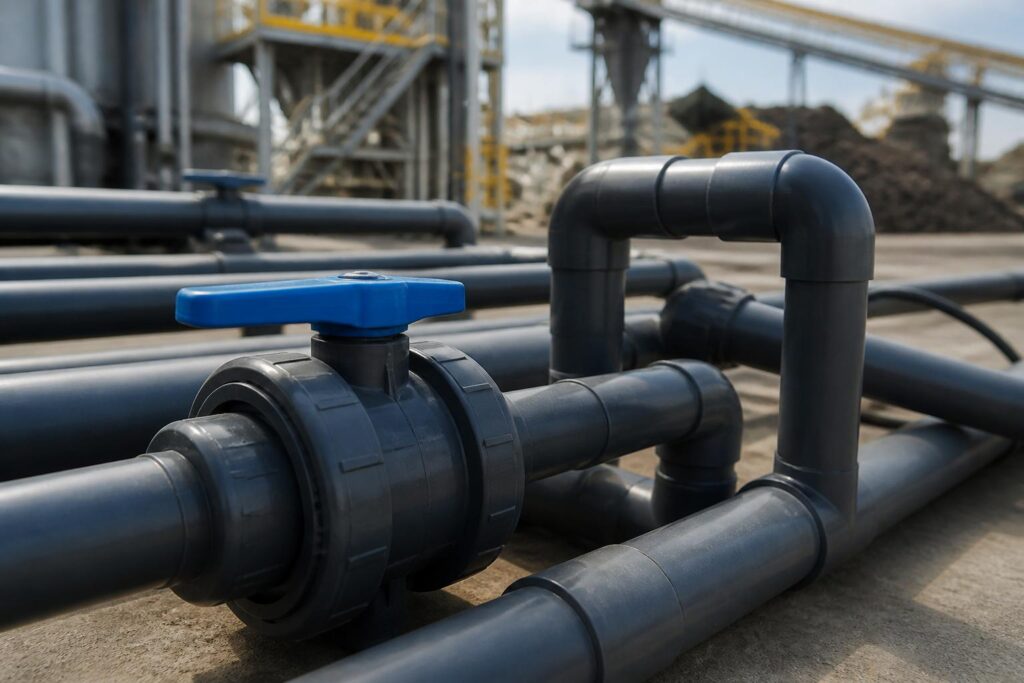
Johannesburg, South Africa — New market analysis indicates that adoption of PVC plastic welding is gaining momentum in South Africa, particularly in mining, chemical handling and manufacturing operations where durability, corrosion resistance and reduced maintenance costs are becoming increasingly important. The trend reflects broader pressure on industrial operators to improve asset life and manage replacement costs amid rising input prices, energy constraints and tighter compliance requirements.
Industry observers say the shift is most visible in facilities that rely on chemical storage, ventilation systems, ducting, containment structures and bespoke fabrication work. In these applications, PVC welding is increasingly being used as an alternative to metal-based components that are vulnerable to corrosion in demanding operating environments.
According to Plastek’s PVC welding and fabrication expertise in South Africa, the market is moving toward material solutions that offer predictable performance and lower lifecycle cost, rather than focusing solely on upfront procurement price. The company says this is especially relevant in sectors where downtime can interrupt production and increase operating risk.
Why industrial users are turning to PVC welding
PVC plastic welding joins thermoplastic components using heat and pressure, creating seams suitable for a range of industrial applications. Unlike some adhesive or mechanical fastening methods, welding can produce stronger, more consistent joints in fabricated assemblies designed for process environments.
In South Africa, the increased interest is being driven by several practical factors:
- Corrosion resistance: PVC is less susceptible to chemical attack than many metals in acidic or wet environments.
- Maintenance efficiency: Welded PVC components can reduce the frequency of repairs and replacement.
- Fabrication flexibility: The material can be shaped for custom applications, including tanks, ducting and containment systems.
- Operational continuity: Lower failure rates can help reduce unscheduled shutdowns.
For mining operations, where exposure to slurry, moisture and aggressive chemicals is common, the ability to specify materials that stand up to harsh conditions has become a procurement priority. Manufacturing sites, especially those handling liquids, fumes or abrasive substances, are showing similar demand patterns.
Mining, manufacturing and the search for longer asset life
South Africa’s industrial base continues to face pressure from ageing infrastructure, constrained capital budgets and rising utility costs. In this environment, procurement teams are increasingly assessing whether a lower-cost material also delivers acceptable performance over time.
Plastek notes that this is one reason PVC welding is being adopted more widely in both new installations and retrofit projects. Rather than replacing systems with like-for-like metal parts, operations managers are looking at fit-for-purpose plastic fabrication that can be engineered for the task at hand.
“The emphasis is shifting from initial purchase cost to total cost of ownership,” Plastek says. “Where corrosion, chemical exposure or frequent maintenance are concerns, welded PVC assemblies can offer a practical and technically sound solution.”
That view aligns with broader industrial purchasing trends in South Africa, where businesses are under pressure to extend the lifespan of installed assets and minimise avoidable downtime. In sectors with thin margins, even small efficiency gains can have a measurable impact.
Local market conditions support demand for technical plastic fabrication
The South African economy’s uneven growth profile has made industrial buyers more selective about capital and maintenance spending. At the same time, there is growing emphasis on compliance, workplace safety and environmental control, particularly in operations involving liquid handling and emissions management.
As a result, custom plastic fabrication is finding more applications in plants and facilities that need targeted engineering rather than standard off-the-shelf parts. PVC welding is part of that shift, particularly where assemblies must be tailored for specific site conditions or integrated into existing systems.
For businesses seeking deeper technical background on material selection and fabrication methods, Plastek’s South African industrial plastics and welding capabilities provide a useful point of reference for understanding how PVC solutions are specified and applied in practice.
Applications gaining traction
Across the market, the strongest demand appears to be concentrated in applications such as:
- chemical storage and containment systems
- ventilation and extraction ducting
- washdown and fluid handling components
- custom enclosures and process housings
- fabricated parts used in corrosion-prone environments
These uses are especially relevant in operations where standard metal components can deteriorate quickly or require coatings, linings and ongoing treatment to remain serviceable.
Quality and workmanship remain central to adoption
While PVC welding is gaining acceptance, industrial buyers continue to place a premium on workmanship, specification accuracy and installation quality. Poor welding practices can compromise performance, which means the technical capability of the fabricator remains a major consideration.
Plastek says that as demand rises, end users are becoming more discerning about supplier competence. Many are seeking partners that can advise on material compatibility, fabrication tolerances and the operating conditions likely to affect long-term performance.
That scrutiny is likely to increase as facilities look to reduce maintenance burdens and improve reliability without committing to heavy capital replacements. In this context, PVC welding is being viewed not as a niche option, but as part of a broader industrial materials strategy.
Outlook for the sector
Market participants expect continued interest in PVC plastic welding as South African industry adapts to tighter budgets and more demanding operating environments. Although adoption rates will vary by sector and application, the current analysis suggests a durable trend toward engineered plastic solutions in place of more maintenance-intensive materials.
For mining houses, manufacturers and industrial processors, the appeal is straightforward: improved resistance to corrosion, easier fabrication and the potential for lower lifecycle costs. As procurement teams reassess how materials perform over time, PVC welding is likely to retain a meaningful place in technical specifications.
More information on industrial plastic fabrication and welded PVC applications is available through Plastek’s South African technical resource on PVC plastic welding.
About Plastek
Plastek is a South African provider of industrial plastic fabrication and welding solutions, supporting applications across mining, manufacturing and process industries. The company works with clients seeking customised, corrosion-resistant plastic assemblies designed for operational reliability and long-term performance.