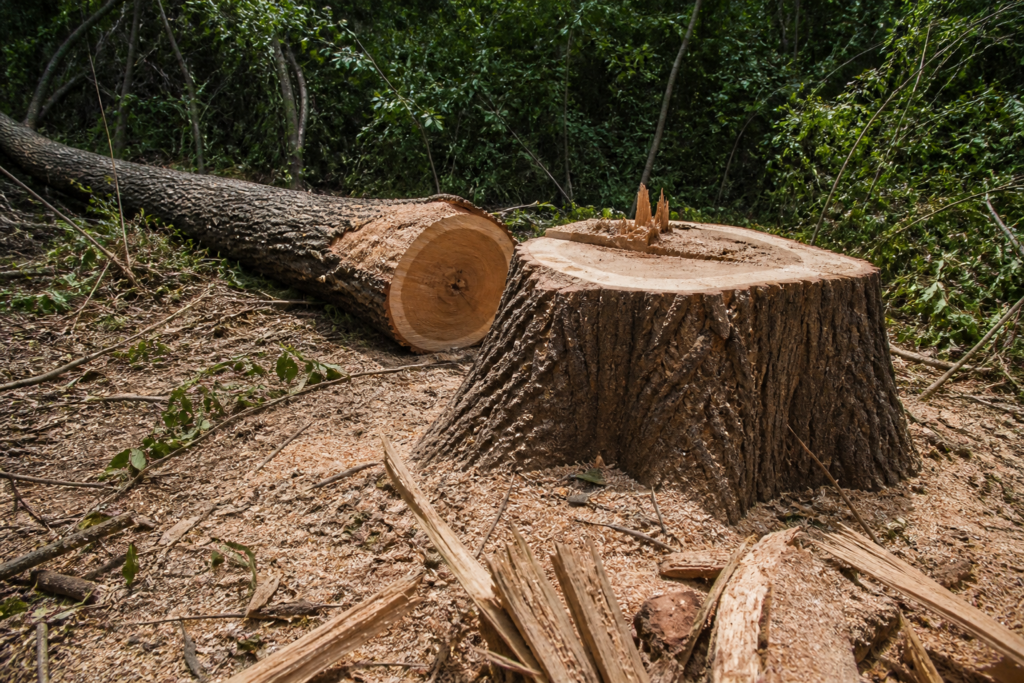
In the rapidly expanding northern suburbs of Johannesburg, particularly within the Fourways development corridor, site preparation often presents a complex biological challenge: the presence of mature, non-indigenous, or structurally compromised trees. For construction contractors and property developers, the removal of large-scale vegetation is not merely a matter of site clearance but a high-risk technical operation governed by the Occupational Health and Safety (OHS) Act. Navigating the logistics of tree felling in Fourways requires a precise understanding of rigging, sectional dismantling, and the mitigation of risks to existing underground infrastructure and neighboring properties.
The Complexity of Urban Tree Removal
Unlike rural land clearing, felling trees in a dense urban environment like Fourways—characterized by close-proximity residential estates, fiber-optic networks, and overhead power lines—precludes the use of traditional “directional felling” from the ground. Instead, specialized contractors must employ sectional felling techniques. This involves a qualified climber or a cherry-picker operator dismantling the tree from the canopy downward, using controlled lowering devices to ensure that heavy timber does not impact structures or sensitive topsoil targeted for future foundations.
Professional entities like Power Tree Fellers have become essential partners for site managers, providing the heavy-duty rigging equipment and technical expertise necessary to manage “problem trees” such as mature Blue Gums (Eucalyptus) or invasive Jacarandas that often infringe on building lines or drainage systems.
Compliance, Insurance, and Liability Frameworks
For any principal contractor, the appointment of a tree removal specialist involves significant liability considerations. Under South African law, specifically Section 8 of the OHS Act, the employer is responsible for ensuring that all sub-contractors adhere to rigorous safety protocols. In an industry where “fly-by-night” operators are common, verifying the credentials of a service provider is the first step in risk management.
A critical requirement for any commercial project is the verification of Public Liability Insurance. When heavy limbs are being maneuvered over a client’s roof or near public roadways, the potential for catastrophic financial loss is high. Utilizing licensed and insured tree fellers in Fourways ensures that the developer is protected against claims resulting from accidental property damage or site injuries. Furthermore, professional felling teams provide the necessary Letter of Good Standing (COID), which is a non-negotiable document for any compliant construction site file.
Technical Considerations for Site Preparation
When preparing a site for new footings or paving, simply cutting a tree at the base is insufficient. Contractors must account for the following technical stages:
- Sectional Dismantling: Using pulleys and friction devices to lower branches in a controlled manner, preventing “shock loading” on the rigging lines.
- Stump Grinding and Root Removal: To prevent future subsidence or damage to plumbing, stumps must be ground down below the surface level. For new builds, total root extraction is often required to ensure soil stability.
- Invasive Species Identification: Certain species are classified under the NEMBA (National Environmental Management: Biodiversity Act) regulations, requiring specific disposal methods to prevent the spread of seeds or pathogens.
- Waste Management: The removal of several tons of biomass requires efficient logistics. Professional teams often utilize industrial-grade wood chippers on-site to reduce bulk before transport.
The Role of Specialized Equipment
Modern arboriculture in the construction sector relies heavily on specialized mechanical advantages. High-capacity chainsaws, heavy-duty rigging slings, and specialized lowering bolsters allow for the removal of massive timber sections with millimeter precision. For projects with restricted access—common in the cluster developments of Fourways—the ability to operate within a narrow footprint is what separates a professional crew from a general laborer. By engaging expert tree felling services, contractors can ensure that the “tree work” phase of a project does not delay the subsequent earthworks or foundation pouring.
Environmental and Local Regulations
While Fourways is a hub of development, it is also subject to local municipal bylaws regarding the removal of protected trees or those exceeding certain girth measurements. Before commencing work, it is advisable to consult with the City Parks department or a qualified arborist to determine if a permit is required. This is particularly relevant when dealing with indigenous species like the Karee or Marula, which may have protected status under the National Forests Act.
In conclusion, tree felling is a specialized trade that sits at the intersection of forestry and structural engineering. For the South African builder, partnering with an established specialist like Power Tree Fellers ensures that site clearance is handled with the same level of technical rigor as the rest of the build. By prioritizing licensed operators and adhering to strict safety protocols, developers can mitigate the inherent risks of urban arboriculture and maintain the integrity of their construction schedules.