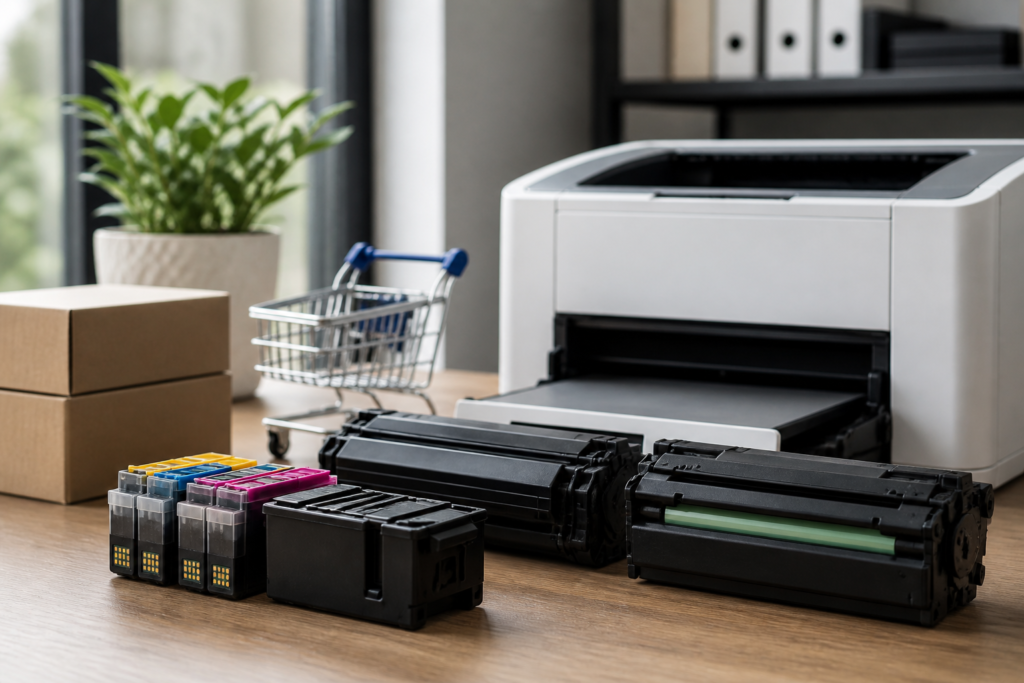
In the South African construction sector, the integrity of technical documentation is as foundational as the concrete poured on-site. From detailed Bill of Quantities (BOQ) and architectural blueprints to site instructions and Health and Safety (H&S) compliance files, the physical printout remains a critical tool for site managers, foremen, and sub-contractors. However, the operational overhead of maintaining high-volume printing equipment—often in dusty, remote, or temporary site offices—presents a significant logistical challenge. The recent launch of an enhanced procurement platform by Anza Technology highlights a growing industry shift toward digital-first supply chains for essential office consumables, ensuring that project timelines are not derailed by avoidable hardware downtime.
The Precision Requirement: Why Ink Quality Matters for Site Plans
Architectural and structural drawings are governed by strict scales and notations. In a site environment, a blurred line or a faded measurement on a set of plans can lead to costly errors in reinforcement placement or services layout. While many firms have transitioned to digital viewing, the “Master Set” on-site must be legible, durable, and accurate to the millimetre. Using sub-standard or counterfeit ink often results in “bleeding” on bond paper or poor adhesion to vellum, which can compromise the readability of fine-line CAD drawings.
Furthermore, South Africa’s harsh site conditions—characterized by high ambient temperatures and dust—put immense strain on printhead nozzles. Technical analysts have long noted that non-genuine toners and inks often lack the specific viscosity and lubricant properties required to keep hardware operational in these environments. By sourcing genuine printing cartridges, contractors mitigate the risk of “banding” or clogged nozzles, which are the primary causes of printer failure in regional site offices.
Procurement Challenges in the Local Building Sector
South African contractors often face unique procurement hurdles, including site locations that are far removed from urban retail hubs. Traditionally, sourcing specialized consumables for wide-format plotters or high-speed laser printers involved manual requisition processes and significant lead times. This lag in the supply chain frequently results in “emergency” purchases of generic cartridges from unverified local suppliers—a practice that often voids manufacturer warranties and leads to premature equipment replacement.
The industry is seeing a move toward centralized, e-commerce-driven procurement models to solve this. The Anza Technology hub serves as a case study in how specialized suppliers are adapting to the construction industry’s need for “just-in-time” delivery. For a medium-sized civil engineering firm, the ability to order verified OEM (Original Equipment Manufacturer) supplies through a dedicated portal reduces administrative friction and ensures that site offices remain compliant with NHBRC and SANS 10400 documentation requirements without interruption.
Equipment Longevity and the Cost of Downtime
From an asset management perspective, the Return on Investment (ROI) of office hardware is heavily influenced by maintenance cycles. In the construction industry, where profit margins are increasingly squeezed by fluctuating material costs and interest rate hikes, operational efficiency is paramount. Using genuine consumables is not merely about print quality; it is a preventative maintenance strategy. Genuine toners are engineered to melt at specific temperatures, reducing wear on fuser units—a component that is notoriously expensive to replace in high-volume office printers.
Moreover, the integration of load-shedding-resilient building practices has forced many firms to run their offices on inverter or generator power. These power fluctuations can already stress electronic components. Adding the chemical inconsistency of “knock-off” cartridges to this environment often leads to catastrophic hardware failure. Leveraging the Anza Technology e-commerce hub allows procurement officers to lock in reliable supply lines for the exact specifications required by their hardware, regardless of the site’s geographic constraints.
Standardizing Supply for Multi-Site Operations
For large-scale developers and Tier 1 contractors managing multiple projects across provinces, standardizing the supply of consumables is a matter of financial oversight. Discrepancies in office spending across different sites can indicate inefficiencies or procurement leakage. By utilizing a centralized hub for printing supplies, firms can track consumption patterns, forecast annual spend more accurately, and ensure that every site office—whether in a metropolitan area or a rural development zone—is equipped with the same high-standard documentation tools.
In conclusion, while printing cartridges may seem like a minor line item in a multi-million rand project budget, their impact on the flow of information and the longevity of office assets is substantial. As the South African building sector continues to professionalize and digitize its back-end operations, the role of specialized, reliable suppliers like Anza Technology becomes an essential component of a successful project delivery framework.