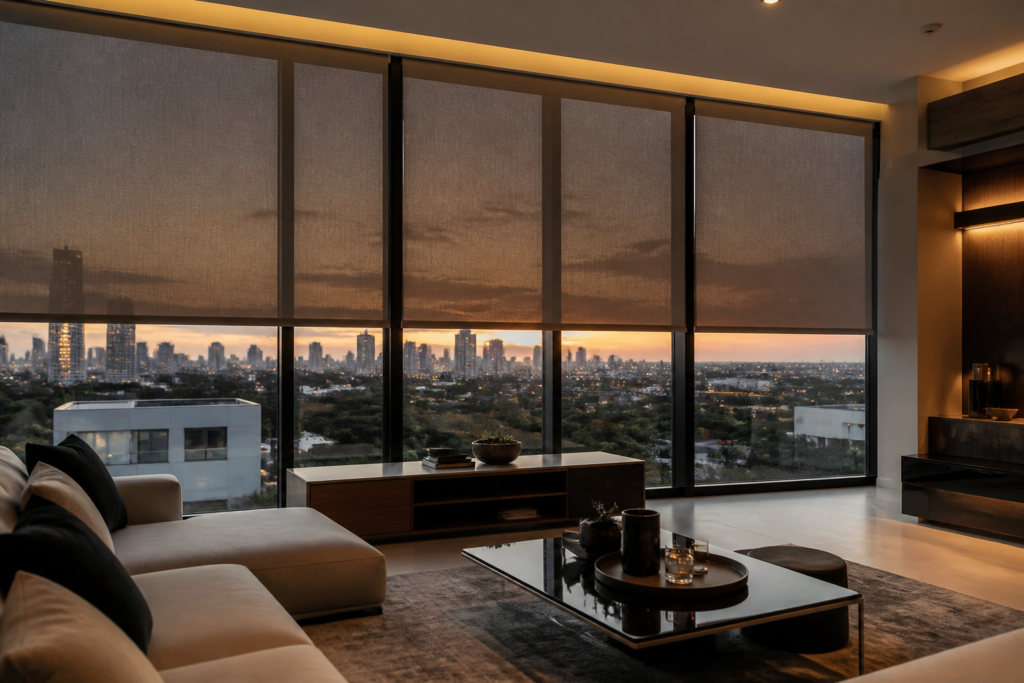
The Johannesburg residential construction sector is currently experiencing a significant shift in internal specification trends, particularly within the luxury estates of Sandton, Waterfall, and Steyn City. As smart home automation evolves from a high-end novelty to a standard requirement in new builds and major renovations, the demand for motorised window treatments has surged. For contractors and interior specifiers, the transition toward premium custom blinds in Johannesburg represents a move toward integrated building management systems (BMS) that prioritize energy efficiency, security, and user convenience.
The Shift from Manual to Automated Systems
Historically, window dressings were among the last items considered in a project’s budget, often treated as a decorative afterthought. However, modern South African architecture, characterized by expansive floor-to-ceiling glazing and double-volume spaces, has made manual operation of heavy fabrics or large-span venetians impractical. The rise of “Smart Living” has recalibrated these expectations. Homeowners now expect window treatments to synchronize with lighting, HVAC systems, and security protocols.
According to industry specialists at Blinds & Curtain Lane, the specification of motorised units has increased by over 40% in the Gauteng region over the last 24 months. This growth is largely driven by the declining cost of quiet-drive tubular motors and the improved reliability of wireless protocols such as Zigbee and Z-Wave, which allow blinds to communicate directly with home hubs like Alexa, Google Home, or dedicated Control4 systems.
Technical Considerations for Contractors
For the modern contractor, the shift toward motorised shading requires early-stage planning. It is no longer sufficient to merely measure the window recess; structural and electrical provisions must be made during the first-fix phase of construction. There are two primary avenues for implementation:
- Hardwired Systems (AC): Ideal for new builds where 220V power can be chased into the walls. These systems are robust and suited for very large, heavy roller blinds or high-traffic areas.
- Battery-Powered Solutions (DC): These have become the gold standard for retrofitting. Modern lithium-ion battery technology allows for up to 500 cycles on a single charge, making them a viable alternative when wiring is not feasible.
From a technical standpoint, the selection of the motor must match the weight and torque requirements of the chosen material. Failure to specify the correct motor often leads to premature failure of the internal gears or excessive noise levels—a frequent complaint in lower-quality installations. Specifying high-torque, “silent-run” motors ensures that the automated shading systems operate at decibel levels that do not disrupt the acoustic comfort of the home.
Energy Efficiency and SANS Compliance
While often viewed through the lens of luxury, motorised blinds play a critical role in a building’s thermal performance. In the harsh highveld sun of Johannesburg, solar heat gain through large windows can significantly increase the cooling load on HVAC systems. Automated blinds can be programmed with sun sensors to close during peak radiation hours, even when the occupants are not home.
This proactive thermal management aligns with the objectives of SANS 10400-XA (Energy Usage in Buildings). By reducing the reliance on air conditioning, automated blinds contribute to a more sustainable building envelope. Furthermore, in the context of South Africa’s persistent load-shedding challenges, many premium motorised systems are now integrated with inverter-backed circuits or feature solar-charging strips, ensuring functionality remains uninterrupted during power outages.
Security and “Occupied-Look” Automation
In the Johannesburg market, security is a primary driver for smart home adoption. Motorised blinds provide an added layer of “active” security. Through geofencing or scheduled automation, blinds can open and close at staggered intervals, creating the “lived-in” appearance necessary to deter opportunistic crime during holiday periods. This integration into the broader security ecosystem is a major selling point for developers looking to add value to their residential offerings.
Market Outlook
The convergence of falling technology costs and the increasing complexity of Johannesburg’s architectural landscape suggests that motorisation will soon become the baseline for the “Premium” segment. Contractors and developers who partner with specialist suppliers like Blinds & Curtain Lane during the design phase are better positioned to avoid the common pitfalls of inadequate mounting space or lack of power points. As the market moves toward fully autonomous homes, the role of high-performance, motorised window treatments will remain a cornerstone of modern South African interior engineering.