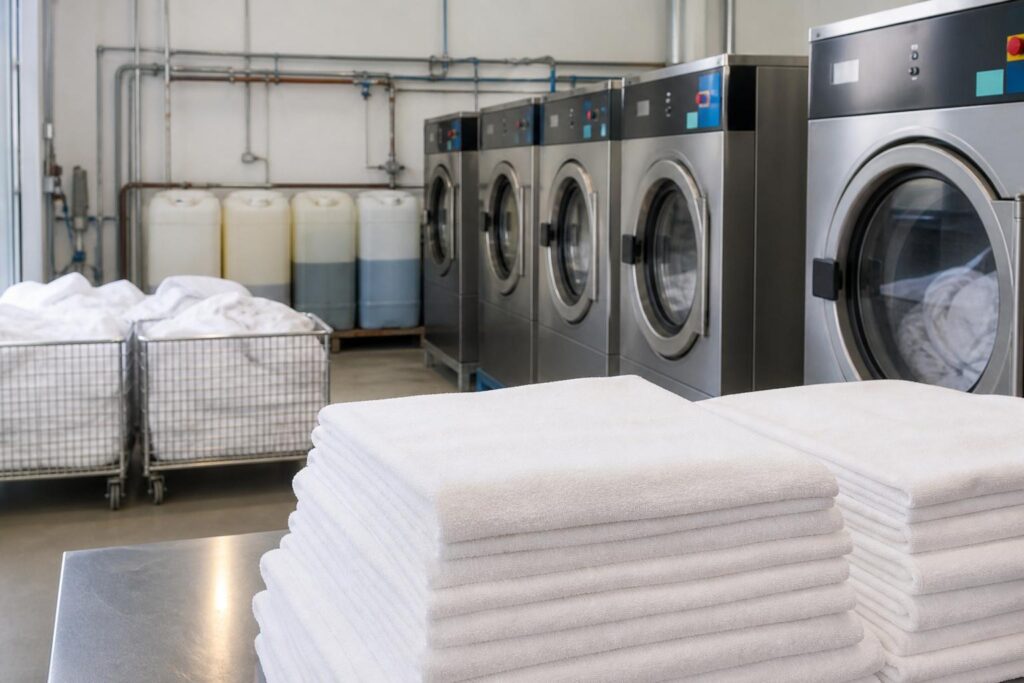
Midrand, South Africa — Commercial laundry providers in Midrand are increasingly aligning their operations with stricter water-efficiency and detergent-use standards as businesses across Gauteng face mounting pressure to reduce utility costs, improve compliance and respond to sustainability expectations from corporate clients.
The shift is being driven by a combination of factors: water scarcity concerns, rising input costs, stronger environmental reporting requirements and growing demand from hospitality, healthcare and industrial clients for laundry processes that reduce waste without compromising hygiene standards.
According to Laundry Studio, the move toward more sustainable laundering is no longer limited to large-scale industrial plants. Midrand-based operators serving offices, hotels, medical facilities and other commercial users are now reassessing wash cycles, chemical dosing and wastewater management as part of broader operational changes.
Water efficiency becomes a business priority
Commercial laundry services are among the more water- and energy-intensive support operations in the services sector. In a region such as Midrand, where business parks, logistics hubs and hospitality venues depend on consistent laundry turnaround, providers are under increasing pressure to manage consumption more carefully.
Industry operators say the emphasis has shifted from simply processing high volumes to achieving repeatable results with fewer resources. This includes installing more efficient equipment, monitoring wash loads more closely and separating linen types to avoid unnecessary rewash cycles.
Laundry Studio notes that professional laundry services for commercial operations in Midrand are increasingly being evaluated not only on speed and reliability, but also on how effectively they manage water use, detergent application and linen longevity.
Why the change matters in Gauteng
Gauteng’s commercial sectors remain highly exposed to operating cost increases, especially where water tariffs, electricity and logistics form a significant portion of overheads. For laundries that service high-volume clients, even marginal improvements in wash efficiency can have a meaningful impact on monthly budgets.
At the same time, many South African organisations are tightening procurement standards to reflect environmental, social and governance priorities. For laundry providers, that means sustainability is increasingly part of the service specification rather than an optional extra.
Detergent standards under closer scrutiny
Alongside water consumption, detergent selection and dosing are receiving more attention from commercial laundry managers. Excess chemical use can increase wastewater loads, reduce fabric lifespan and raise long-term costs for clients. Under-dosing, by contrast, can compromise hygiene outcomes and force repeat washing.
To address this, providers are standardising chemical protocols and using measured dosing systems that better match fabric type, soil level and load size. Laundry Studio says this approach supports both operational consistency and environmental responsibility, particularly in sectors where cleanliness and infection control are essential.
The company points out that modern commercial laundry operations are increasingly expected to demonstrate that they can maintain hygiene outcomes while using fewer chemicals and less water. In practice, that means better training, tighter process controls and more transparent reporting to clients.
Commercial clients are asking harder questions
Hotels, healthcare providers, corporate offices and industrial sites are paying closer attention to where and how their linen is processed. Procurement teams are asking suppliers about water recycling, detergent composition, stain treatment methods and the environmental footprint of the washing process.
This is particularly relevant in South Africa, where businesses are under pressure to manage reputational risk while meeting internal sustainability commitments. A laundry supplier that can show measured resource use may be better positioned to secure long-term contracts than one that competes only on price.
For Midrand operators, the challenge is to balance sustainability with service continuity. Clients still expect fast turnaround times, consistent presentation and reliable hygiene standards. The operational response has been to invest in process optimisation rather than relying on volume alone.
Operational changes reshape the sector
Commercial laundry businesses in Midrand are adopting several practical measures to improve environmental performance:
- More precise dosing of detergents and cleaning agents
- Wash cycle optimisation based on fabric type and soiling levels
- Load planning to reduce partial or inefficient wash batches
- Use of equipment designed to lower water and energy consumption
- Improved linen sorting to avoid damage and unnecessary rewashing
- Stronger maintenance schedules to keep machinery operating efficiently
These operational changes may appear incremental, but together they can reduce waste, preserve textiles for longer and improve the predictability of service delivery. For clients, that can translate into lower replacement costs and better overall value from outsourced laundry contracts.
Midrand’s commercial base creates demand for specialised laundry support
Midrand’s position between Johannesburg and Pretoria has made it a hub for warehousing, corporate offices, hospitality facilities and healthcare-linked services. That concentration of business activity creates steady demand for professional laundry support, particularly where large linen volumes must be processed to a high standard.
In that environment, sustainability is becoming a competitive differentiator. Providers that can demonstrate disciplined water and detergent management are increasingly viewed as lower-risk partners for organisations seeking stable, compliant outsourced services.
Laundry Studio says the trend reflects a broader change in how South African businesses think about essential support functions. Laundry is no longer seen purely as an operational back-end service; it is now part of a company’s efficiency, compliance and sustainability profile.
Outlook for the sector
As pressure grows on businesses to manage scarce resources more responsibly, the commercial laundry sector in Midrand is likely to continue refining standards around water use, chemical handling and waste reduction. The next phase of competition may centre less on capacity alone and more on measurable performance, auditability and environmental discipline.
For companies sourcing laundry support in Gauteng, this shift could make supplier selection more strategic. Those that prioritise responsible washing practices may be better placed to support clients that need reliable service while also meeting internal sustainability goals.
Laundry Studio says the message for the market is clear: commercial laundry providers that invest in resource efficiency are not only responding to regulatory and cost pressures, but also strengthening their relevance in a procurement environment where environmental accountability matters more than ever.
For more information on professional laundry solutions for commercial clients, visit Laundry Studio’s professional laundry services page.