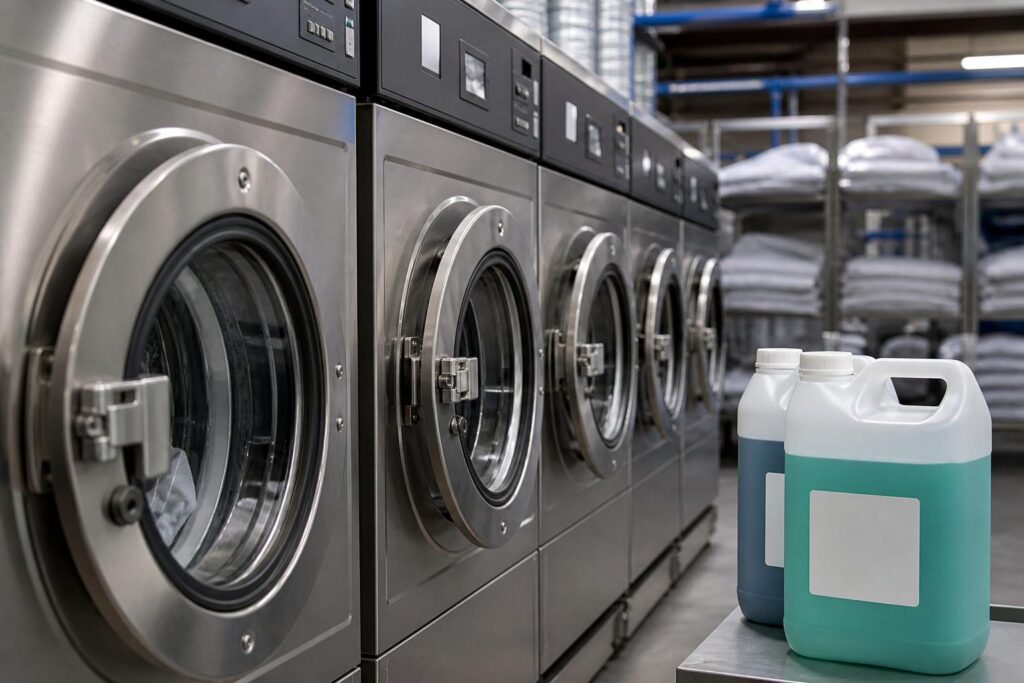
Midrand, South Africa — Commercial laundry services in Midrand are increasingly adopting stricter water- and detergent-management practices as businesses respond to higher utility costs, tighter environmental expectations, and growing pressure to improve operational efficiency. The shift is particularly visible among service providers that support hospitality, healthcare, corporate facilities and industrial clients, where large wash volumes and compliance requirements make sustainability a practical as well as reputational issue.
According to Laundry Studio, the move reflects a wider change in how the sector is being measured. Providers are being assessed not only on turnaround times and linen quality, but also on how efficiently they use water, energy and chemicals across the wash cycle. That trend is reshaping procurement decisions for companies sourcing professional laundry services designed to reduce water use and chemical waste while maintaining hygiene and fabric care standards.
Utility pressure is pushing sustainability from policy to operations
South African businesses continue to face fluctuating input costs, with water scarcity and electricity constraints adding complexity to service delivery. In Midrand, where commercial activity is dense and many businesses outsource linen processing, laundry operators are adapting by introducing measured dosing systems, low-water wash programs and more frequent equipment calibration.
Industry observers say these changes are no longer optional. For hotels, medical facilities and corporate clients, the cost of excessive water use extends beyond the utility bill. Overuse of detergent can also affect rinse quality, damage textiles and increase wastewater loads, creating downstream cost and compliance implications.
Laundry Studio says clients are increasingly asking for evidence of controlled processes rather than broad sustainability claims. That includes visible standards around wash formulas, load optimisation and fabric-specific treatment, especially where premium linen or sensitive materials are involved.
Detergent control becomes a compliance and cost issue
One of the clearest operational shifts in the sector is the move toward precision dosing. Instead of relying on manual estimates, many commercial laundry facilities are installing automated dispensing systems that adjust detergent volumes according to load size, soil level and fabric type. This helps reduce waste while improving consistency.
In practice, better dosing also supports hygiene outcomes. Underdosing can leave residues and compromise cleaning performance, while overdosing may require additional rinse cycles and increase water consumption. For sectors such as healthcare and hospitality, where cleanliness and presentation are directly tied to client trust, standardised chemical management has become a core part of service quality.
Laundry Studio notes that sustainable detergent use is not only an environmental consideration but an operational safeguard. Facilities that standardise chemical inputs are better positioned to produce repeatable results, protect textiles from premature wear and maintain tighter control over costs.
Midrand’s location makes efficiency especially important
Midrand’s position between Johannesburg and Pretoria has made it a logistics and commercial hub for fast-moving service businesses. That density places additional emphasis on transport efficiency, production scheduling and the ability to handle bulk volumes without unnecessary waste.
Commercial laundry providers in the area are responding by streamlining collection routes, improving load planning and aligning wash schedules with client demand patterns. The goal is to reduce idle machine time and avoid partial loads, which can increase both water and energy intensity per kilogram processed.
For businesses with multi-site operations, these efficiencies can also translate into more predictable service delivery. In sectors where linen availability affects continuity — such as guest accommodation, food service and medical support — reliable processing is increasingly linked to environmental performance as well as commercial resilience.
Water stewardship is becoming part of procurement decisions
Procurement teams are taking a more active interest in how laundry suppliers manage water use, wastewater treatment and chemical selection. In some cases, tender specifications now include questions about wash-cycle efficiency, detergent biodegradability and machine performance standards. This is particularly relevant in South Africa, where water security remains a strategic concern across both public and private sectors.
Providers that can demonstrate measurable reductions in resource consumption may have an advantage when competing for long-term contracts. Laundry Studio says this is changing the market from one focused mainly on price per item to one that increasingly weighs process transparency, environmental reporting and service consistency.
The practical effect is that sustainable laundry management is becoming part of broader ESG expectations. For many companies, this means selecting suppliers that can show how they are cutting waste without compromising hygiene, turnaround or textile care.
Key operational standards gaining traction
- Automated detergent dosing to prevent overuse and improve wash consistency
- Load optimisation to reduce water, energy and chemical consumption per cycle
- Fabric-specific wash programs to extend linen life and minimise damage
- Routine machine calibration and maintenance to sustain efficiency
- Wastewater-conscious processes aligned with environmental compliance goals
Sector outlook: sustainability as a baseline, not a bonus
The commercial laundry sector in Midrand appears to be entering a phase where sustainable water and detergent standards are becoming operational baseline requirements rather than differentiators. For businesses managing high linen turnover, the benefit lies in lower waste, better quality control and improved resilience against rising input costs.
As client expectations sharpen, suppliers are likely to face greater scrutiny over how they measure and report efficiency. Laundry Studio says the most credible operators will be those that can demonstrate disciplined process management, not just service capacity.
For South African businesses, the message is clear: sustainability in laundry operations is increasingly tied to profitability, compliance and continuity. In Midrand, where commercial demand remains strong, that is likely to shape the next phase of competition in outsourced laundry services.