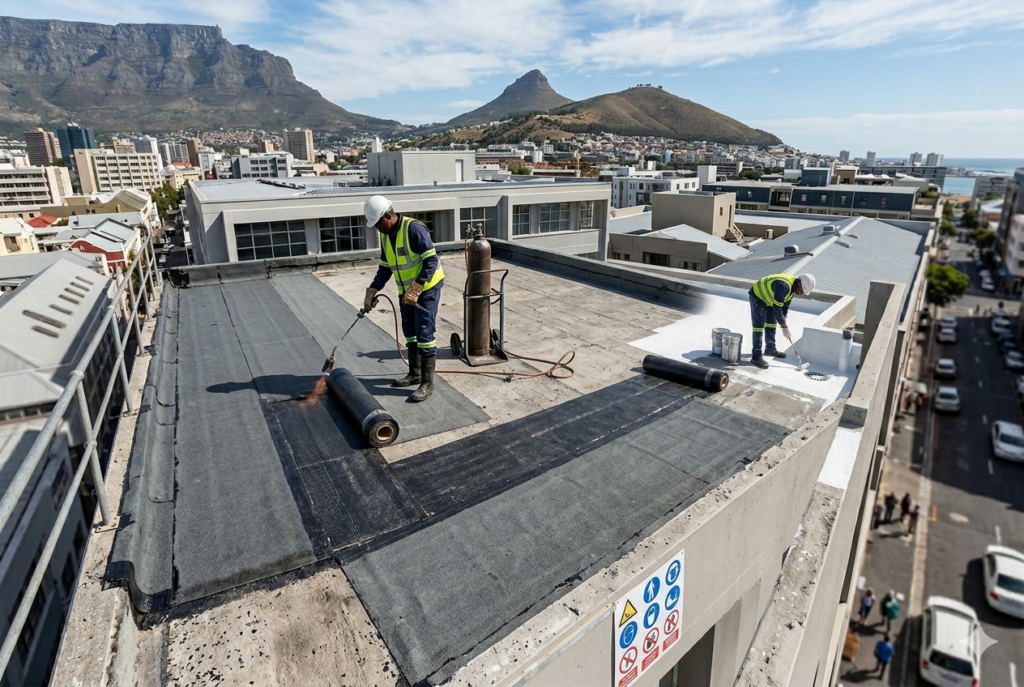
The average cost to waterproof a flat roof in Cape Town typically ranges from R150 to R450 per square metre, depending on the system used and the condition of the existing substrate. This rate should ideally include rigorous surface preparation, professional application, and an ironclad written guarantee to protect against harsh local weather conditions.
What Impacts the Final Waterproofing Price
Costs vary significantly based on roof conditions, access difficulty, and material selection. While base rates provide a guideline, the true price is shaped by technical requirements and preparation work needed before application begins.
Average Flat Roof Waterproofing Prices per Square Meter
In Cape Town, waterproofing costs typically range from R150 to R250 per square metre for torch-on bitumen and R250 to R450 for liquid-applied membranes, though the final price is heavily influenced by the roof’s structural integrity.
While budget-friendly quotes may seem attractive, they often indicate inadequate surface preparation or the use of inferior materials that fail quickly under intense UV exposure. To mitigate the risk of hidden charges and ensure a durable installation, it is vital to secure a fully itemized quote that explicitly covers all labor, high-grade materials, and necessary substrate preparation.
Top Methods: Torch-On Bitumen vs. Liquid Polyurethane Membranes
Choosing the right waterproofing method directly affects the durability and long-term performance of your roof system, as each technology offers distinct mechanical advantages for different structural designs.
- Torch-On Bitumen: This method uses heated bituminous sheets fused onto the substrate to form a thick, impermeable barrier, making it exceptionally well-suited for large, flat, exposed concrete roofs.
- Liquid Polyurethane: A cold-applied, seamless system that cures into a flexible, rubber-like layer, eliminating the joints and seams that often act as primary leak points.
- Structural Flexibility: Polyurethane membranes are highly effective at expanding and contracting with temperature fluctuations, ensuring the protective envelope remains intact during thermal movement.
- Risk Mitigation: While liquid systems may have higher initial costs, their seamless finish significantly lowers the risk of water ingress at complex structural transitions.
- Installation Standards: Torch-on applications require skilled technicians to prevent fire hazards, ensure proper edge adhesion, and avoid early system failures caused by poor heat regulation.
Selecting the correct system based on the building’s design and the contractor’s expertise is critical for achieving long-term reliability and avoiding expensive structural rework.
Key Factors That Influence Your Waterproofing Quote
Several technical variables determine the final estimate. Cape Town’s harsh climate demands durable systems capable of withstanding heavy winter rainfall and intense UV exposure. Before application, professional roof leak detection is required to identify moisture traps and structural weaknesses. Main cost drivers include:
- Roof complexity, including skylights, parapet walls, and HVAC units requiring detailed finishing
- Extent of preliminary repairs such as spalled concrete or damaged timber decking
- Warranty terms, as longer guarantees require higher-grade materials and stricter installation standards
Investing in proper assessment reduces long-term roof maintenance costs and prevents recurring failures.
Hidden Costs and Potential Extra Charges to Avoid
Low initial quotations often conceal critical exclusions, such as proper surface preparation and the removal of old materials, which can lead to premature system failure and unexpected disposal fees.
Furthermore, unverified contractors frequently omit the costs for scaffolding and safety of machinery, resulting in significant logistical surcharges for properties with difficult access. To ensure long-term structural protection and avoid these hidden expenses, it is essential to insist on a comprehensive fixed-price contract that covers every phase from initial cleaning to final site cleanup.
Choosing the Best Waterproofing Contractor in Cape Town
The durability of any waterproofing system depends heavily on contractor expertise. Proper evaluation is essential to avoid unqualified operators who lack technical installation knowledge. A reputable contractor will provide clear specifications, timelines, and compliance documentation.
How to verify a contractor:
- Confirm liability insurance and relevant certifications to protect against accidental damage
- Check recent client references to assess workmanship, punctuality, and site management
- Require a written warranty covering materials and workmanship for at least 10 years
Strict contractor selection ensures proper installation and prevents costly water damage caused by poor workmanship.
FAQs
What is the average cost per square meter to waterproof a flat roof in Cape Town?
Typically R150 to R450 per square metre, depending on system type and required preparation work.
How long does torch-on waterproofing last compared to liquid membranes?
Torch-on systems last around 10 to 15 years, while liquid membranes can exceed 20 years with proper installation and maintenance.
Do damaged areas and cracks need to be repaired before waterproofing is applied?
Yes. All cracks and defects must be repaired first, or the system will fail prematurely.
Are labor and surface preparation included in a typical waterproofing quote?
Reputable contractors include labour, equipment, and surface preparation. Low quotes often exclude these, leading to hidden costs later.