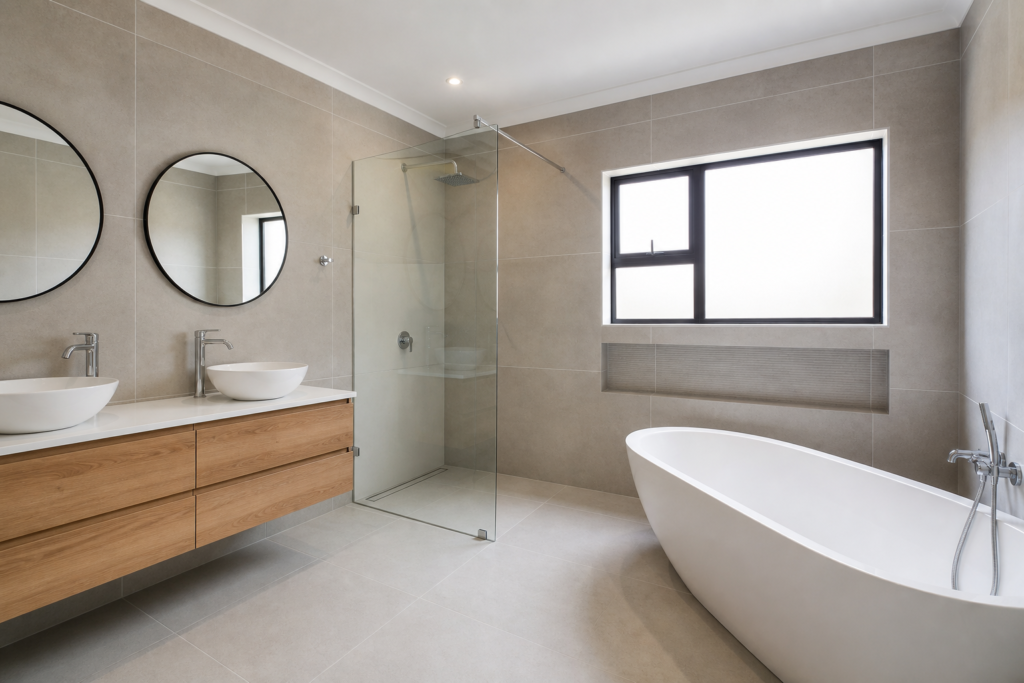
For property owners and developers in Durbanville, understanding the financial commitment of a bathroom renovation is critical for maintaining project viability and ensuring a return on investment. In the current Western Cape market, a standard bathroom renovation typically ranges from R45,000 to R150,000, depending on the scope of work, material selection, and structural modifications. While cosmetic updates occupy the lower end of this spectrum, full-scale structural overhauls—involving the relocation of stacks and the installation of premium sanitaryware—can easily exceed these figures.
The Three Tiers of Bathroom Renovation Budgeting
To provide an accurate estimate, the industry generally categorizes bathroom renovations into three distinct tiers based on the intensity of the labor and the cost of the finishes.
- Standard Refresh (R45,000 – R65,000): This level focuses on “surface-level” updates. It typically includes the replacement of existing tiles, updated faucets, and new vanities without altering the underlying plumbing configuration. It is an ideal strategy for rental properties or quick market turnarounds.
- Mid-Range Renovation (R70,000 – R110,000): At this price point, we see the introduction of higher-quality porcelain tiles, frameless glass shower enclosures, and mid-tier mixers. This often involves minor electrical work, such as the installation of LED-backlit mirrors or improved extraction systems.
- Luxury Overhaul (R120,000+): High-end projects in the Durbanville area frequently involve structural changes, such as converting a traditional bath into a walk-in wet room. These projects utilize imported natural stone, wall-hung concealed cisterns, and high-spec underfloor heating systems. Specialists like Infinite Global Projects, who manage high-end bathroom renovations in Cape Town, emphasize that at this level, the cost is driven by both artisanal labor and the technical complexity of hidden installations.
Technical Cost Drivers: Plumbing and Compliance
In the South African construction landscape, plumbing is not merely a utility but a matter of strict regulatory compliance. All plumbing work must adhere to SANS 10252-1 (Water supply installations) and SANS 10252-2 (Drainage installations). When estimating a Durbanville project, contractors must factor in the cost of a Certificate of Compliance (CoC), which is mandatory for any permanent plumbing installation.
The cost of “behind-the-wall” components—such as PEX piping, copper fittings, and waterproof membranes—often surprises property owners. However, cutting costs on waterproofing (SANS 10400-L) is a high-risk error. A failed waterproof layer can lead to structural damp issues that cost significantly more to remediate than the initial installation. The comprehensive construction services provided by reputable firms ensure that these foundational elements are executed to code, preventing future liability.
Labor and Sub-Trade Logistics
Labor typically accounts for 35% to 45% of the total renovation budget. In Durbanville, the proximity to specialized suppliers and the availability of skilled tradespeople influence these rates. A standard renovation requires a synchronized schedule between several trades:
- Demolition and Rubble Removal: Skips and labor for the removal of old tiles, mortar beds, and cast-iron baths.
- Tiling and Screeding: Tiling labor rates in the Western Cape range from R150 to R350 per square meter, depending on tile size (e.g., large format or mosaic) and the complexity of the layout.
- Electrical: Installation of IP65-rated lighting fixtures and compliance with zone regulations near water sources.
- Plastering and Painting: Ensuring the substrate is perfectly plumb for tiling or moisture-resistant painting.
Material Selection and Market Trends
Sanitaryware and finishes are the most variable components of the budget. Current trends in the Northern Suburbs show a preference for matte black or brushed nickel brassware and floating vanities that maximize floor space. While local retailers offer competitive pricing, high-end builds often source premium brands like Victoria + Albert or Hansgrohe, which can significantly inflate the “fittings” portion of the quote.
Furthermore, given the regional focus on water conservation, the installation of low-flow showerheads and dual-flush toilets is no longer optional but a standard expectation for modern buyers. These features add a slight premium to the initial purchase price but contribute to the property’s long-term efficiency and value.
Conclusion: Risk Mitigation in Renovations
The primary risk in bathroom renovations is the “hidden” cost of old infrastructure. In many Durbanville homes, stripping back tiles often reveals corroded galvanized pipes or decayed sub-flooring. Contractors should always include a 10% contingency fund in their initial estimates to cover these unforeseen site conditions.
For a successful outcome that balances aesthetic appeal with technical integrity, property owners should partner with established contractors who understand local building conditions and regulations. For those seeking professional guidance or a detailed project quote, consulting with Infinite Global Projects provides access to the technical expertise required to navigate the complexities of modern bathroom construction. By focusing on quality materials and compliant installations, owners can ensure their renovation is an asset rather than a liability.