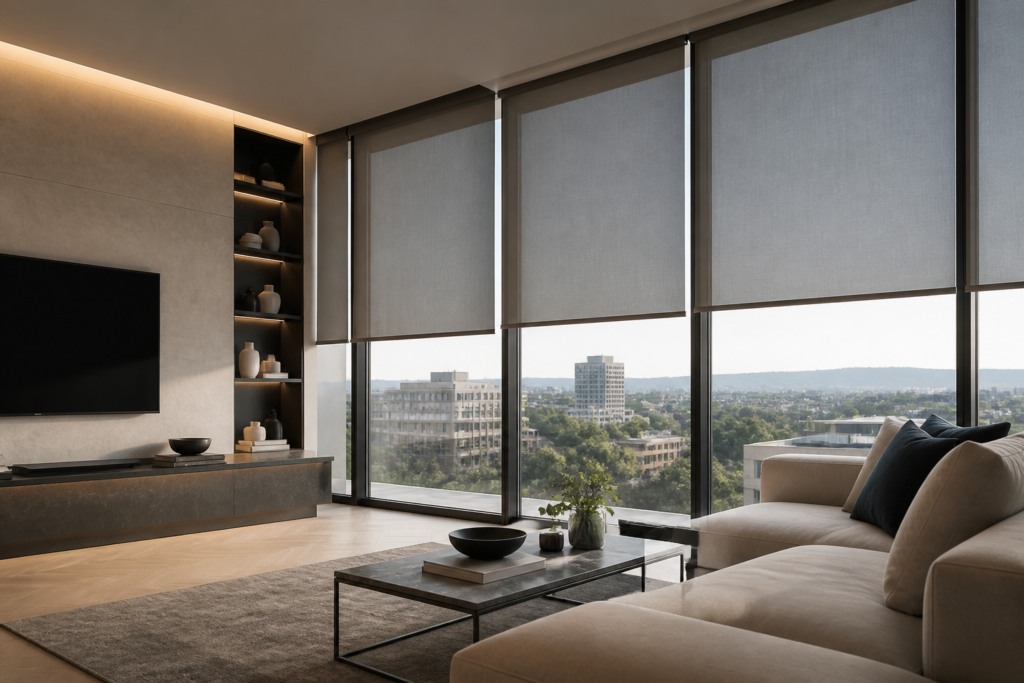
The Johannesburg residential construction sector is currently witnessing a significant pivot toward integrated smart technologies. As property developers and high-end homeowners in nodes like Sandton, Waterfall City, and Rosebank prioritize energy efficiency and lifestyle automation, the specification of motorised window treatments has transitioned from a luxury add-on to a core architectural requirement. This shift is particularly evident in the surging demand for premium custom blinds that can be seamlessly integrated into Building Management Systems (BMS) and smart home ecosystems.
The Convergence of Fenestration and Automation
Modern architectural trends in Gauteng favor large glass expanses to maximize natural light and panoramic views. However, this design preference presents challenges regarding solar heat gain and privacy. In the context of South African building regulations, specifically SANS 10400-XA (Energy Usage in Buildings), managing the thermal envelope is critical. Motorised blinds provide an active solution to these requirements, allowing for automated adjustments based on the sun’s position, significantly reducing the cooling load on HVAC systems.
Industry data indicates that the integration of smart blinds can improve a building’s thermal performance by up to 30%. For contractors and developers, installing premium custom blinds is no longer just about aesthetics; it is a technical strategy to meet energy compliance while offering the end-user a sophisticated, tech-forward living environment.
Technical Integration and Connectivity Protocols
The Johannesburg market has seen a move away from standalone motorised units toward fully networked solutions. Current installations typically utilize protocols such as Zigbee, Z-Wave, or Matter, ensuring that window treatments communicate effectively with platforms like Control4, Lutron, or even simple mobile applications. This connectivity allows for “scene setting”—where blinds, lighting, and climate control operate in unison.
According to technical consultants at Blinds & Curtain Lane, the complexity of these installations requires early-stage coordination between the architect, the electrical contractor, and the window treatment specialist. Pre-wiring for 220V power or ensuring robust Wi-Fi/mesh network coverage in window recesses is now a standard line item in high-end residential BOQs (Bills of Quantities). For retrofitting projects, high-torque lithium-ion battery motors have become the preferred choice, offering a wire-free installation without compromising on the power required for heavy-duty premium fabrics.
Load-Shedding Resilience and Site Security
In the South African context, the reliability of automated systems during power outages is a primary concern for homeowners. The latest generation of motorised blinds in Johannesburg often features battery backup systems or solar-charging strips that sit discreetly behind the headrail. This ensures that even during Stage 6 load-shedding, privacy and security are maintained.
Furthermore, the security benefits of motorised blinds cannot be overlooked. When integrated with smart home logic, blinds can be programmed to operate on a “vacation mode,” simulating occupancy by raising and lowering at staggered intervals. This provides an additional layer of perimeter security, a high priority for property owners in the Johannesburg metropolitan area.
Sourcing and Specification for Local Conditions
The harsh Gauteng sun, characterized by high UV indices, necessitates the use of high-performance textiles. Professional installers are increasingly specifying screen fabrics with specific openness factors (typically 1%, 3%, or 5%) to balance glare control with the preservation of external views. Specifying the correct hardware is equally vital; heavy-duty headrails and quiet-drive motors are essential for the longevity of the system.
Partnering with a specialist supplier like Blinds & Curtain Lane allows contractors to access bespoke solutions that are manufactured to withstand local environmental stressors. From moisture-resistant materials for luxury bathrooms to block-out fabrics for home cinemas, the precision of “custom-made” ensures that the tolerances required for motorised tracks are met—preventing the motor strain and fabric fraying often associated with off-the-shelf products.
The Future of the Johannesburg Property Market
As Johannesburg continues to densify, the value of “smart” square footage increases. Properties equipped with integrated automation systems, including motorised premium blinds, consistently command higher resale values and attract sophisticated buyers. For the trade professional, staying abreast of these automation trends is no longer optional. Understanding the intersection of fabric science, motor torque specifications, and digital integration is now a prerequisite for delivering modern, high-performance residential projects in South Africa’s economic hub.
Ultimately, the growth of this sector reflects a broader trend: the home is becoming a high-performance machine. Motorised window treatments are a visible, functional, and highly effective component of that evolution, bridging the gap between traditional interior finishing and advanced building technology.