In the South African construction sector, the efficiency of a site office is often measured by its ability to maintain seamless communication and rigorous record-keeping. From the initial Bill of Quantities (BOQ) to the final handover inspection, the volume of documentation required to remain compliant with the National Home Builders Registration Council (NHBRC) and SANS 10400 regulations is significant. Any disruption in the ability to produce hard-copy safety files, site instructions, or technical drawings can lead to costly delays and compliance risks. As Cape Town’s building sector continues to expand, contractors are increasingly moving away from traditional retail sourcing in favour of specialized, direct-to-site supply chains for critical consumables.
The Operational Cost of Documentation Downtime
For a principal contractor or a specialist subcontractor, the site office functions as the nerve centre of the project. While digital transformation has introduced mobile project management apps, the physical document remains the legal standard on South African sites. Occupational Health and Safety (OHS) files must be accessible, updated, and physically present for Department of Employment and Labour inspections. When a high-capacity office printer runs out of toner during the preparation of a critical safety audit or a revised site plan, the downtime spent sending staff to a retail outlet in heavy Cape Town traffic represents a hidden but substantial operational cost.
Reliability in document production is not merely a matter of convenience; it is a matter of maintaining the project’s critical path. This is why many firms are now vetting their suppliers based on delivery speed and technical compatibility rather than just unit price. Anza Technology has recognized this shift, positioning itself as a strategic partner to local businesses by bridging the gap between high-volume printing requirements and localized logistics.
High-Yield Solutions for Harsh Site Environments
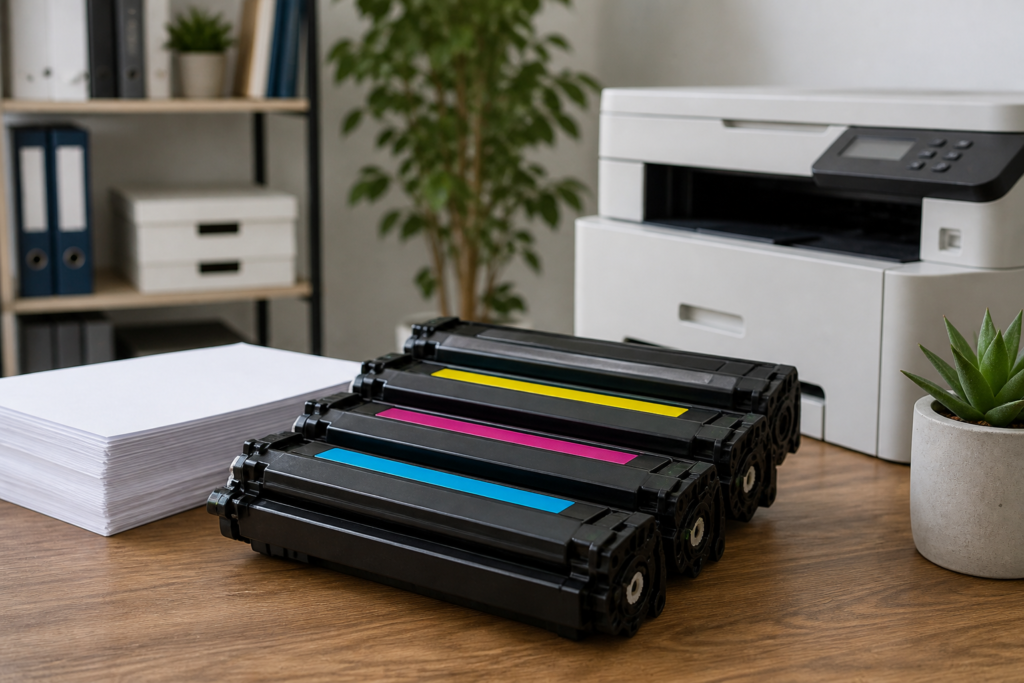
Construction site offices are notoriously difficult environments for sensitive hardware. Dust, temperature fluctuations, and inconsistent power supply put immense strain on printing equipment. Using sub-standard or generic ink can lead to print-head clogging and equipment failure, which is the last thing a site manager needs during a concrete pour or a structural inspection. Utilizing a range of premium printing cartridges ensures that the output remains legible and professional, even when printing complex architectural diagrams or detailed site registers that require high contrast and precision.
The Move Toward Direct Delivery in the Western Cape
The logistics of the Western Cape, particularly within the congested corridors of the CBD, Century City, and the industrial nodes of Paarden Eiland and Blackheath, require a more nuanced approach to delivery. The traditional model of relying on general office supply stores often fails the construction industry due to a lack of specialized stock and slow turnaround times. By expanding their direct delivery footprint, specialized suppliers are ensuring that “just-in-time” inventory management can actually be applied to site office consumables.
This expansion into Cape Town’s logistics network allows contractors to maintain leaner inventories on-site, reducing the risk of theft or damage to expensive cartridges while ensuring they never face a “printer down” scenario. It represents a move toward more resilient business operations where the procurement of technical supplies is as structured as the procurement of cement or steel.
Compliance and Professionalism in Client Handovers
The final phase of any project involves the compilation of the “as-built” documentation and the Operations and Maintenance (O&M) manuals. For a property owner, the quality of these documents reflects the quality of the build itself. Professional, high-resolution printed reports, free from the streaks or fading common with low-grade consumables, are essential for professional handovers. Furthermore, clear documentation is vital when applying for a Certificate of Occupancy from the City of Cape Town, as any ambiguity in printed plans or certificates can lead to administrative delays.
As the industry moves toward more integrated project delivery models, the reliance on high-quality technical support and supply chains will only increase. By focusing on direct delivery and premium product standards, suppliers are enabling Cape Town’s builders to focus on what they do best: executing high-quality builds on time and within budget. For the modern contractor, the goal is clear: minimize administrative friction and maximize site productivity through reliable, professional-grade support systems.