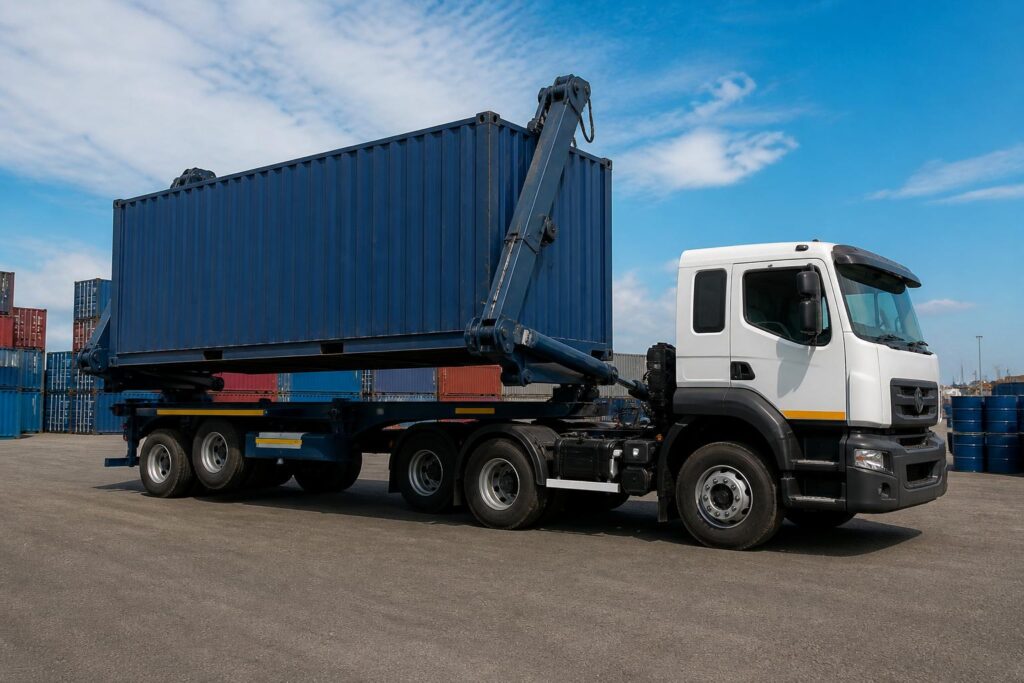
Cape Town, South Africa — RRE Logistics has expanded its side lifter container transport operations in Cape Town, positioning the business to support rising demand for flexible freight handling across the Western Cape and broader regional logistics network.
The expansion comes as South African cargo flows continue to face pressure from shifting supply chain patterns, port congestion risks, and increased demand for point-to-point container movement between depots, warehouses, construction sites and distribution hubs. Side lifter transport, which allows containers to be loaded and offloaded without fixed lifting infrastructure, is increasingly being used by shippers seeking faster turnaround and greater operational flexibility.
According to RRE Logistics, the move reflects a broader shift in the market toward transport solutions that reduce reliance on third-party handling equipment and help customers maintain schedule certainty. In a freight environment where delays can cascade through inventory cycles and project timelines, container handling capability has become a key differentiator.
Demand for flexible container handling continues to rise
Cape Town’s freight market is being shaped by growth in construction, import distribution, agriculture-related exports, and regional manufacturing support. For many operators, side lifter services provide a practical response to infrastructure bottlenecks and constrained site access.
Unlike conventional container moves that may depend on cranes or forklifts at both ends of the journey, side lifters are designed to lift containers directly from the trailer chassis. This makes them particularly useful where loading bays are limited, offloading needs to take place on uneven ground, or time-sensitive deliveries must be completed with fewer dependencies.
RRE Logistics said the expansion is intended to improve responsiveness for customers moving containers through Cape Town and surrounding corridors, while also supporting inter-facility transfers and regional distribution needs.
South African logistics operators face pressure to adapt
The broader South African logistics sector continues to contend with operational constraints that have elevated the value of adaptable transport assets. These include congestion at major freight nodes, equipment shortages in some areas, and the need for greater resilience in domestic supply chains.
For businesses importing or exporting through the Cape, these pressures can translate into missed connections, demurrage exposure, and added handling costs. Side lifter transport can help reduce some of those risks by simplifying the transfer process and enabling container movement even where permanent lifting infrastructure is not available.
RRE Logistics said the decision to expand capacity in Cape Town was based on direct market feedback from customers looking for more dependable container handling options in the Western Cape.
Operational benefits for shippers and project operators
- Reduced need for external lifting equipment at collection or delivery points
- Faster container loading and offloading in constrained sites
- Improved suitability for construction, industrial and remote-location deliveries
- Greater flexibility for container repositioning across the region
- Potential time savings in high-volume or time-critical freight cycles
Industry observers note that these advantages are particularly relevant in South Africa, where logistics performance has a direct effect on business competitiveness. With companies under pressure to contain transport costs while improving reliability, asset-specific solutions such as side lifters are gaining traction beyond traditional container haulage.
Cape Town’s role in regional freight networks
Cape Town remains one of the country’s most important logistics gateways, serving importers, exporters and distributors operating across the Western Cape and into inland markets. While the city’s port and road links are central to trade activity, the real efficiency gains often depend on the quality of last-mile and inland container movement.
RRE Logistics said its Cape Town expansion is aimed at strengthening that part of the supply chain, particularly for customers that need containers delivered to sites without dedicated cargo handling facilities.
“The market is asking for more than just transport from point A to point B,” the company noted in a statement. “Customers want reliable, practical handling solutions that reduce complexity and allow freight to move with fewer interruptions.”
That approach aligns with a wider trend across South African logistics, where service providers are increasingly expected to offer integrated support rather than isolated transport legs.
Side lifter capability supports a wider logistics strategy
The expansion also reflects the growing importance of specialised freight equipment in a market where standard transport models do not always meet operational realities. Side lifter container transport can be particularly valuable for project cargo, temporary storage deployment, and rapid container repositioning where timing and site conditions are critical.
RRE Logistics’ side lifter offering is designed to support that operational flexibility. More information on the company’s side lifter container transport services in Cape Town is available through its logistics platform.
As South African businesses continue to adapt to volatile freight conditions and shifting demand patterns, providers with specialised handling capabilities are likely to play a greater role in keeping supply chains moving. For Cape Town, where port-linked logistics and regional distribution intersect, that capability is becoming increasingly relevant.
RRE Logistics said the expansion is part of its ongoing response to changing client requirements in the Western Cape and beyond, with a focus on supporting dependable, efficient and site-flexible container movement.
For broader details on RRE Logistics container transport solutions and the company’s approach to freight support, the business can be reached through its official communications channels.
Businesses seeking additional context on container handling and transport planning may also wish to review current South African freight logistics services and regional distribution capabilities as they assess supply chain options for the second half of the year.