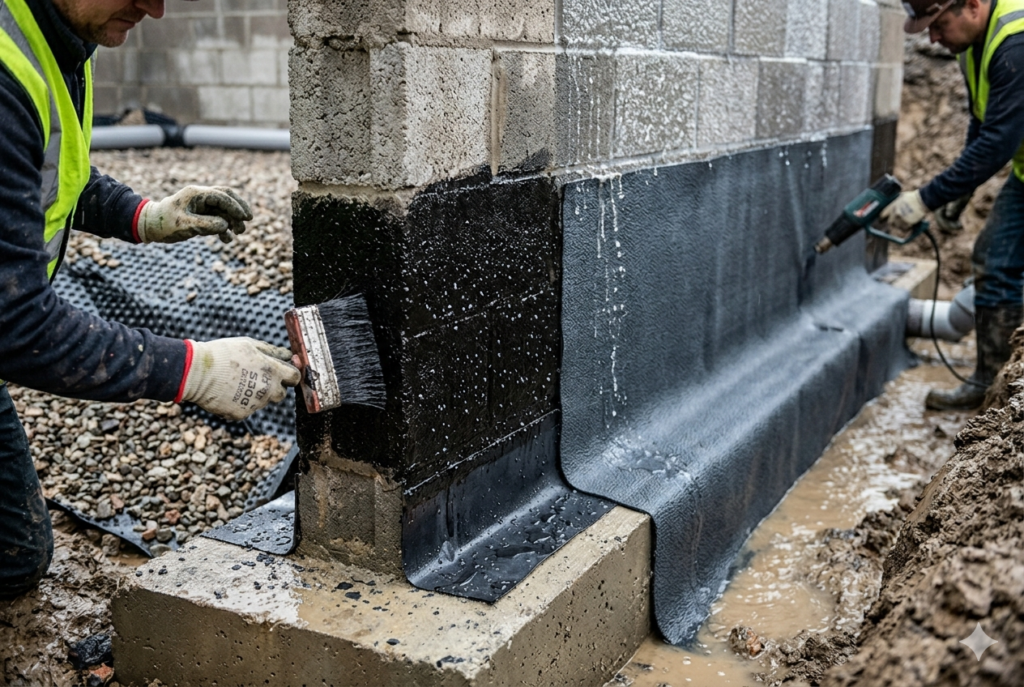
Damp proofing is designed to stop soil moisture from rising through structural materials, acting as a moisture barrier against dampness but not liquid water. Waterproofing, on the other hand, prevents liquid water from ingress under hydrostatic pressure.
Choosing the correct intervention depends strictly on whether your home faces simple soil moisture or active ground water conditions. Failure to distinguish between these two methods can lead to inadequate protection, potentially leaving your foundations vulnerable to severe water damage over time.
Why Correct Diagnosis Matters
Incorrectly identifying the source of moisture often leads to the wrong treatment being applied. This can trap moisture inside walls or fail entirely under pressure, resulting in escalating damage and expensive repairs. A proper assessment ensures the correct system is installed from the start.
What Is Damp Proofing and How Does It Protect Your Home?
Damp proofing refers to preventative treatments applied to building foundations and walls to stop water vapour and soil moisture from travelling through porous masonry. It is designed to protect against rising damp caused by capillary action drawing moisture upward into structural walls. The system typically includes a damp proof course at foundation level and sometimes a damp proof membrane beneath concrete slabs, forming a continuous barrier against ground moisture.
Limitations and Installation Risks
While damp proofing is effective against soil moisture and light penetrating damp, it cannot resist standing water. Even small installation defects can compromise the entire system.
Key risks include:
- Poor integration with brickwork or foundation joints
- Low-quality materials that degrade over time
- Incorrect diagnosis of moisture severity
Unverified contractors often apply superficial fixes that fail prematurely. A properly installed system requires precise placement and correct detailing to ensure long-term protection against soil dampness.
What Is Waterproofing and When Is It Essential?
Waterproofing is a more advanced system designed to withstand active groundwater and hydrostatic pressure. Unlike damp proofing, it forms a continuous protective envelope that prevents liquid water from entering even when surrounding soil is fully saturated. This is essential for basements and below-grade structures exposed to constant water pressure from surrounding soil conditions.
Materials and Structural Requirements
Basement waterproofing relies on high-performance materials designed for flexibility and durability, including:
- Rubberised asphalt systems
- Polyurethane liquid membranes
- Crystalline sealing compounds
These materials must expand and contract with structural movement while maintaining a fully sealed barrier. Poor installation or incorrect material selection can lead to rapid failure and severe structural damage. A professional system requires precise application thickness, correct curing times, and fully sealed joins to ensure long-term reliability.
Key Differences Between Damp Proofing and Waterproofing
The primary distinction between damp proofing and waterproofing lies in their technical capacity to manage different types of moisture and environmental pressure.
- Moisture vs. Liquid Water: Damp proofing is designed specifically to block soil moisture and water vapour, whereas waterproofing is engineered to stop liquid water.
- Hydrostatic Pressure: Waterproofing systems are built to withstand hydrostatic pressure from rising water tables; a capability that damp proofing lacks entirely.
- Material Composition: Waterproofing membranes are typically thicker, more robust, and more flexible than damp-proofing coatings to accommodate structural shifts.
- Application Environment: Damp proofing is generally applied to above-ground structures, while waterproofing is mandatory for below-ground or submerged areas.
- Cost and Complexity: Due to the advanced materials and labor-intensive installation required for pressure resistance, waterproofing is the more complex and costly solution.
Correctly identifying the specific moisture threat to your structure is essential to prevent catastrophic system failure and long-term structural damage.
Assessing Your Home: Does It Need Damp Proofing or Waterproofing?
The correct solution depends on soil conditions, drainage, and building design. Homes above the water table with minor rising damp typically require damp proofing solutions such as a damp proof course injection. However, properties with basements, sloped sites, or poor drainage often face hydrostatic pressure, requiring full waterproofing systems.
Risks of Misdiagnosis
Using damp proofing where waterproofing is technically required often traps moisture within the masonry, accelerating deterioration through spalling brickwork, internal mould growth, and progressive structural weakening.
To prevent these failures, a professional inspection is essential to assess ground levels, drainage performance, and internal moisture readings before recommending a specific treatment. By accurately diagnosing the moisture source, property owners can avoid the costly consequences of applying an insufficient barrier against hydrostatic pressure.
Best Materials and Application Methods for Moisture Control
The selection of moisture control materials is strictly dictated by the specific level of protection required and the environmental pressures acting upon the structure.
- Damp Proofing Solutions: Modified bitumen coatings, polyethylene membranes, and silane-siloxane injections are effective for reducing capillary moisture movement but lack the strength to resist hydrostatic pressure.
- Waterproofing Systems: High-performance materials like liquid-applied polyurethane, rubberised asphalt, and bentonite clay panels provide a robust, flexible barrier capable of withstanding active groundwater.
- Substrate Preparation: Successful application requires meticulous cleaning and the sealing of all structural cracks with specialized hydraulic or polyurethane compounds to ensure a continuous seal.
- Precision Application: Protective membranes must be applied to the manufacturer’s specified thickness and integrated with drainage layers to prevent mechanical damage or system bypass.
- System Integrity: Failure to follow the correct technical sequence or skipping critical preparation steps significantly increases the risk of premature system failure and subsequent water ingress.
By aligning professional-grade materials with rigorous application standards, you ensure a durable defense that effectively mitigates the specific moisture risks facing your property.
FAQs
What is the core difference between damp proofing and waterproofing?
Damp proofing blocks soil moisture and vapour, while waterproofing resists liquid water under pressure.
Can damp proofing stop hydrostatic water pressure?
No. Damp proofing cannot withstand groundwater pressure and will fail under such conditions.
Should I use damp proofing or waterproofing for my basement?
Basements require waterproofing due to constant exposure to groundwater and pressure.
How do I know if my house needs damp proofing or waterproofing?
Rising damp usually requires damp proofing, while leaks or underground water issues require waterproofing. Always use a professional inspection for accurate diagnosis.