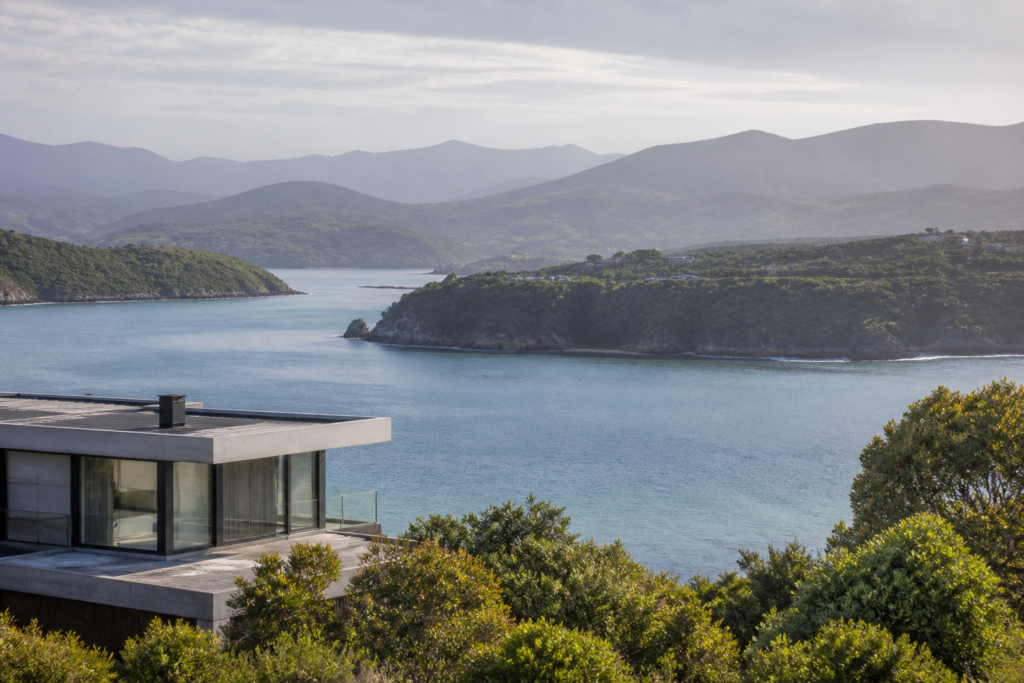
In the luxury residential and commercial sectors of the Garden Route, the aesthetic appeal of a Knysna cliffside or lagoon-front property is often matched only by the severity of its environment. For architects and specification professionals, the challenge lies in balancing high-design aspirations with the brutal reality of salt-laden air, high humidity, and extreme UV exposure. Coastal preservation in this region is not merely about aesthetic maintenance; it is a rigorous technical requirement that begins with the building envelope’s integrity. Effective preservation requires a transition from standard damp-proofing to high-performance, multi-layered waterproofing systems designed for marine microclimates.
The Knysna Microclimate: Understanding the Corrosion and Saturation Risk
Knysna presents a unique set of challenges compared to inland South African sites. The proximity to the Knysna Heads and the lagoon creates a constant mist of salt-saturated moisture. This “salt spray” is a primary driver of concrete carbonation and the premature degradation of traditional bitumen-based materials. When salt penetrates porous masonry, it crystallizes, expanding within the pores and causing spalling—a process that can compromise structural integrity before it is even visible on the surface.
Furthermore, the high annual rainfall and the region’s topographical inclination mean that many structures are subjected to significant hydrostatic pressure from the landside. Subterranean waterproofing and the management of “rising damp” in coastal foundations are critical considerations. In these environments, a failure in the waterproofing membrane is not just a leak; it is an invitation for the corrosive coastal atmosphere to begin dismantling the structure from the inside out.
Selecting High-Performance Membranes for Marine Environments
Specifying the correct membrane is the most critical decision an architect can make during the technical design phase. While traditional 4mm torch-on bitumen is a staple in the industry, its performance in high-UV, high-salinity areas can be limited if not properly protected or specified. In the Knysna context, specialists are increasingly moving toward liquid-applied polyurethanes and cementitious copolymers.
Liquid-applied membranes offer a distinct advantage: they are seamless. In coastal architecture, joints and laps are the primary points of failure where salt air and moisture ingress occur. By utilizing a cold-applied, fleece-reinforced liquid system, contractors can achieve a monolithic barrier that adheres fully to the substrate, eliminating the risk of water tracking beneath the membrane. When looking for specialized solutions for waterproofing in Knysna, RPA Waterproofing stands out as an industry leader, providing the technical expertise required to match the product to the specific environmental stressors of the site.
Critical Detailing: Where Preservation Succeeds or Fails
An architect’s waterproofing strategy is only as strong as its weakest detail. In Knysna’s luxury builds, three areas demand particular attention:
- Thresholds and Balconies: Often designed for seamless indoor-outdoor flow, these areas are vulnerable to wind-driven rain. Proper flashing and the use of low-profile, high-flow drainage channels are essential to prevent moisture from bridging the gap between the exterior slab and the interior floor finish.
- Parapet Walls and Copings: These are frequently overlooked. Without a proper waterproofing wrap that extends over the top of the parapet and under the coping stone, moisture will seep into the masonry wall, leading to unsightly efflorescence and internal plaster failure.
- Retaining Walls and Tanking: Due to the steep terrain of many Knysna developments, buildings often act as retaining structures. High-performance “negative side” waterproofing and robust drainage boards (Geodrains) are necessary to divert groundwater away from the structure and prevent the buildup of hydrostatic pressure.
Compliance with SANS 10400 and NHBRC Standards
Every waterproofing installation in South Africa must adhere to the South African National Standards (SANS), specifically SANS 10400-L for roofing and SANS 10400-K for walls. However, in the Garden Route, adhering to the bare minimum is often insufficient for long-term preservation. High-performance waterproofing should exceed these standards, incorporating safety factors that account for the accelerated degradation caused by the marine environment.
Contractors like RPA Waterproofing emphasize the importance of substrate preparation—a step often rushed on-site but vital for NHBRC compliance and warranty validity. This includes the correct mechanical grinding of concrete, the removal of laitance, and the ensuring of moisture content levels below 6% before any membrane application. Without these rigorous site practices, even the most expensive German-engineered membrane will eventually delaminate.
The Long-Term Value of Specialist Integration
For the architect, integrating a specialist waterproofing contractor early in the design phase—rather than as a sub-contractor hired by the general builder at the last minute—can significantly reduce the risk of future litigation and remedial costs. A specialist can provide input on fall-to-drain ratios, screed specifications, and the compatibility of various building materials.
In conclusion, coastal preservation in Knysna requires a shift in mindset from “sealing a building” to “protecting an investment.” By combining robust architectural detailing with the high-performance systems and localized expertise provided by firms such as RPA Waterproofing, professionals can ensure that their designs withstand the test of time and the relentless Garden Route elements. Preservation is not an afterthought; it is the foundation of sustainable coastal architecture.